- Company News
- 972
Screw Press Sludge Dewatering: Solving Performance Gaps Before Acceptance
Performance gaps before acceptance are often contract gaps, not equipment failures. How to review purchasing terms and acceptance criteria for screw press sludge dewatering.
Screw Press Sludge Dewatering: Solving Performance Gaps Before Acceptance
A screw press sludge dewatering machine that runs smoothly but does not hit the numbers written in the purchase order is one of the most expensive problems a wastewater project can face. The gap rarely appears at the drawing stage. It appears at acceptance — during the pre-shipment test, the factory acceptance test (FAT), or the first days of on-site commissioning — when throughput, cake solids, polymer consumption and operating stability are measured together for the first time.
This article is written for the buyer at exactly that moment: the supplier is chosen, the machine is built or nearly built, and the measured performance does not match the expectation. It answers three practical questions. How should purchasing terms and acceptance criteria be reviewed when the numbers fall short? Where do buyer and supplier most often misunderstand each other? And how should the resolution be documented so the project is finished and the supplier relationship survives it?
The scope is deliberately narrow. This is not a technology-selection guide and not a general equipment overview. It deals with performance gaps that appear before acceptance, and with the contract language, test conditions and correction steps that resolve them.
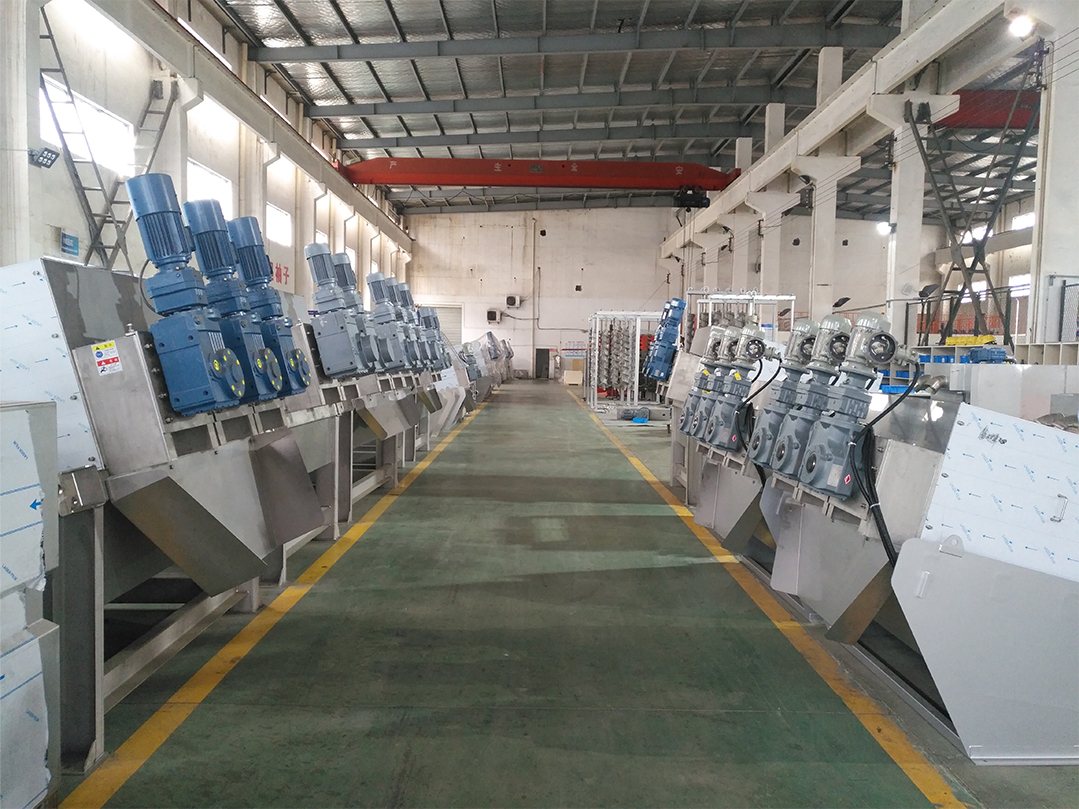
Bnenev Assembly workshop — screw press dewatering units assembled and prepared for pre-shipment testing.
Problem Definition: What a Performance Gap Before Acceptance Actually Is
A performance gap before acceptance is the difference between the acceptance criteria written into the purchase agreement and the results measured during a pre-shipment test, a factory acceptance test, or early commissioning. The decisive word is "written". If expected performance is not stated as a measurable criterion with a defined test method, it cannot be verified — and it cannot be enforced.
Gaps that surface at acceptance usually fall into four groups:
- Measurement gaps. Buyer and supplier measure different things at different points — cake dryness at the discharge outlet versus after storage, throughput during a short trial versus across a full shift.
- Baseline gaps. The sludge used for the test is not the sludge the plant actually produces. Sludge concentration, oil content and viscosity vary, and each variation changes dewatering performance.
- Equipment gaps. A genuine mechanical or control issue: unstable operating parameters, wear on the screw shaft and moving rings, or clogging caused by unstable sludge feed and impurities.
- Commercial gaps. Delivery terms, payment terms, spare parts scope and support commitments were agreed verbally, or left out of the contract altogether.
Many disputes that look like equipment failures at acceptance turn out to be a mixture of the first, second and fourth categories. The machine can be built correctly and still "fail" a test that was never defined precisely enough to pass.
There is a second reason these gaps surface so late. Performance clauses are often written as capability statements — "the unit shall dewater municipal sludge efficiently" — instead of test protocols. A capability statement can be argued about indefinitely. A test protocol with a defined sludge baseline, measurement point and pass/fail threshold can only be verified or failed.
Industry Background: Why Acceptance Discipline Matters More Now
The commercial context makes this discipline more important, not less. The global sludge dewatering equipment market was valued at USD 5.19 billion in 2024 and is projected to reach USD 10.16 billion by 2032, according to Fortune Business Insights. Within that market, the screw press segment is expected to record the highest compound annual growth rate — 9.4% from 2025 to 2032 — while Asia Pacific already accounted for 37.57% of global revenue in 2024, driven by urbanisation and stricter wastewater regulations.
More installed units means more acceptance tests, and more acceptance tests means more opportunities for expectation gaps to become disputes. Buyers who write criteria carefully are not being difficult. They are applying the same logic that has made the screw press segment grow: predictable operating cost and simple, continuous operation.
Regulatory reference points matter as well. EN 12255-8 is the European standard that specifies design principles and construction requirements for sludge treatment and storage facilities in wastewater treatment plants. It is not a machine-level performance guarantee, but it gives a recognised reference frame for how sludge treatment facilities should be designed and documented — useful when acceptance criteria need to be reviewed by a third party.
Benenv (JIANGSU BENENV ENVIRONMENTAL TECHNOLOGIES CO., LTD) is a Chinese environmental technology manufacturer founded in 2011 that designs and produces multi-disk screw presses, dissolved air flotation units, sludge dryers and related water and solid waste treatment equipment. The company operates a 20,000 m² factory, employs around 200 people, exports roughly 70% of its output to markets including Europe, the United States, Southeast Asia, the Middle East and Australia, and reports more than 4,500 project references in over 60 countries. Fortune Business Insights lists Benenv as a key global player in the sludge dewatering equipment market, particularly for its MDS (Multi-Disk Screw press) technology.
One point deserves stating clearly, because it shapes how an acceptance gap should be diagnosed: the dewatering principle itself is seldom the weak link. Compared with centrifuge-based dewatering, screw press designs are generally associated with lower energy consumption, a smaller footprint and lower maintenance frequency — up to 30–50% energy savings, footprint reduced by up to 50%, and maintenance frequency reduced by 30–60%. When a screw press underperforms at acceptance, the cause is more often the feed, the operating parameters or the wording of the contract than the core technology.
Detailed Solution: Six Levers That Close a Gap Before Acceptance
The solution to an acceptance gap is not renegotiation from zero. It is a sequence: convert the expectation into a test, fix the sludge baseline, separate feed-side from machine-side causes, agree the correction loop, and document the outcome.
1. Convert the expectation into a test protocol
A screw press dewatering contract should state acceptance as an activity, not a promise. Benenv's stated purchasing terms for its screw press dewatering equipment provide a useful reference structure: MOQ of 1 unit; delivery terms of FOB, CIF, EXW or DDP; acceptance criteria consisting of a pre-shipment test and FAT inspection; and payment terms of 40/60 TT. Each element has a purpose. The pre-shipment test confirms that the assembled unit runs correctly; the FAT inspection confirms that the unit meets the agreed criteria before it leaves the factory; the 40/60 TT structure ties the balance payment to completion rather than to shipment alone.
If a contract contains a performance figure but no test method, the first corrective step is to write the missing method into an annex: which sludge, which feed rate, which polymer, which measurement point, over which duration, and what result counts as a pass.
2. Fix the sludge baseline before arguing about machine performance
Variation in sludge characteristics — concentration, oil content and viscosity — directly affects dewatering performance, and the standard corrective method is to optimise polymer dosing and adjust operating parameters. In contract terms, that means the acceptance annex should define an operating range rather than a single number: minimum and maximum solids concentration, expected oil content, and the polymer type and dosing basis used during the test.
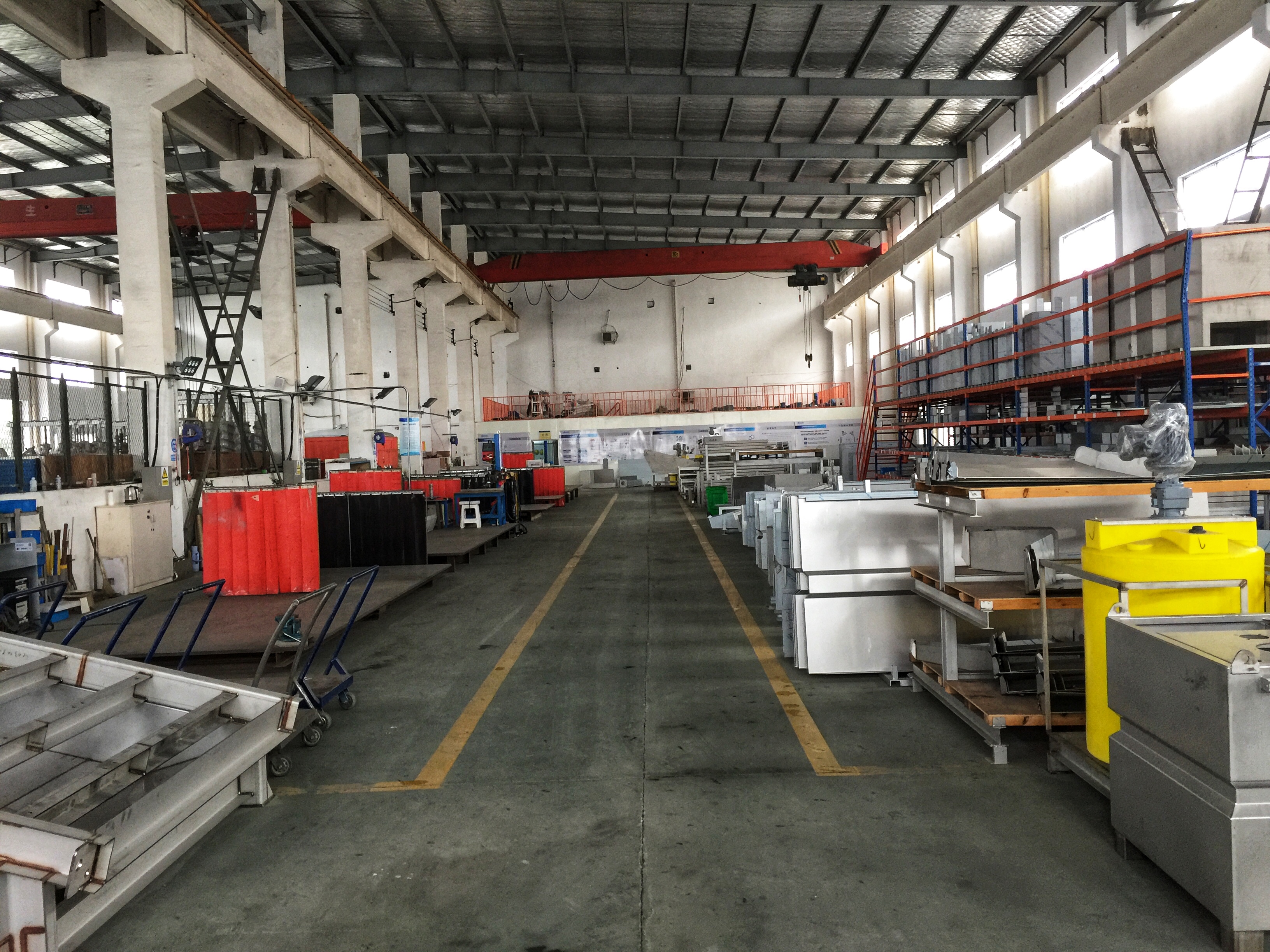
Bnenev Welding workshop — fabrication and material verification for wear-resistant press components.
3. Separate feed-side problems from machine-side problems
Clogging is one of the most common reasons a screw press underperforms in its first weeks of operation. The documented cause is unstable sludge feed or impurities entering the unit, and the corresponding control method is a self-cleaning design combined with a continuous washing system. In an acceptance discussion this distinction matters commercially: a feed-side problem is normally a plant-side corrective action (upstream screening, flow equalisation, wash water availability), while a machine-side problem is clearly a supplier obligation.
4. Write wear parts, service intervals and spare parts into the contract
Wear on the screw shaft and moving rings is a normal consequence of continuous operation, not a defect. It is managed through low-speed operation and wear-resistant materials, supported by a maintenance plan and a defined spare parts supply. Buyers who include these items in the acceptance documentation avoid the situation where a machine passes its performance test but has no defined service path in year two.
5. Include control stability in the acceptance scope
Unstable operating parameters produce inconsistent performance even when the mechanical assembly is sound. The standard countermeasure is PLC-based automatic control with real-time adjustment, typically supported by automation solutions and remote technical support. During acceptance, this should be demonstrated rather than described: the control system should hold the unit inside its parameter band while feed conditions change.
6. Close the environmental and safety gaps on paper
Leakage, noise and corrosion are the issues most likely to be raised by the plant's environment, health and safety team rather than by the process engineer. The documented controls are a sealed design, corrosion-resistant materials and low-noise operation, together with anti-corrosion solutions such as SS304 or SS316 wetted parts. If these requirements are not written into the acceptance criteria, a machine can pass the process test and still be rejected by the site.
Step-by-Step Breakdown: Documenting a Resolution Path
When a screw press sludge dewatering machine does not meet expected performance before acceptance, the following sequence keeps the discussion factual and keeps both parties inside the contract.
Step 1 — Restate the gap as a number, not an opinion
Record the measured value, the expected value, the measurement point and the test conditions in one line. "The dewatering unit is not performing" is not an actionable statement; a feed rate, a cake solids figure and a polymer consumption figure measured under defined conditions is.
Step 2 — Re-read the purchasing terms and acceptance criteria
Identify exactly what was agreed. Where the contract is silent — no test method, no measurement point, no sludge range — record the silence. Silence is the most common root cause, and it is also the easiest item to correct in a written annex.
Step 3 — Confirm the sludge baseline
Compare the sludge used in the test with the range the plant actually produces, focusing on concentration, oil content and viscosity. Optimise polymer dosing and adjust operating parameters before concluding that the machine itself is at fault.
Step 4 — Run a joint diagnosis split into three sides
Separate the variables into feed-side (impurities, flow stability, wash water), machine-side (screw shaft and moving ring wear, clearance, sealing) and control-side (PLC parameters, dosing response, alarm logic). Assigning each observation to a category prevents the conversation from becoming a general dispute about quality.
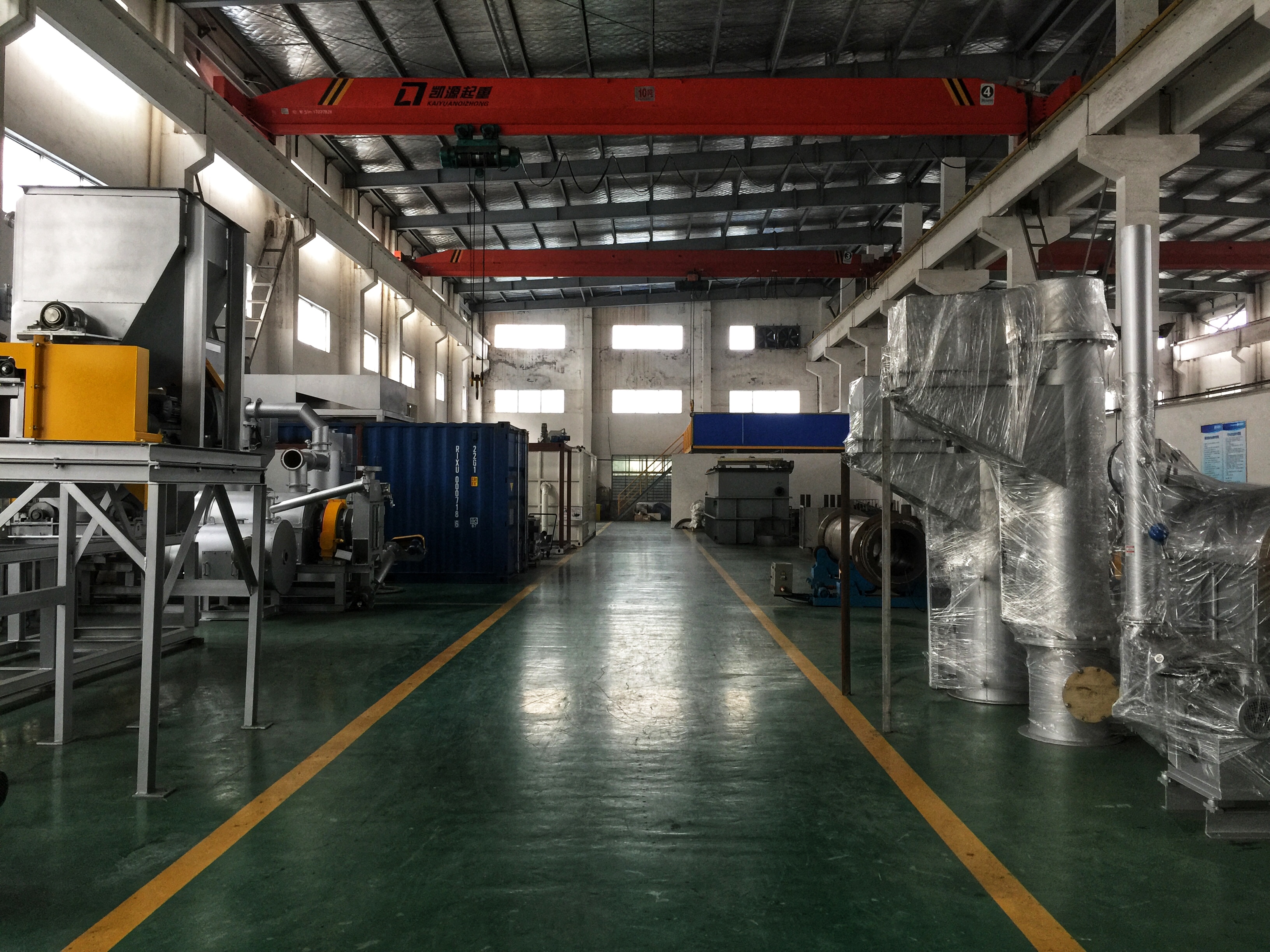
Benenv Non-standard Workshop — where site-specific configurations are built to match agreed feed conditions.
Step 5 — Agree the correction loop in writing
Define who changes what, by when, and how the re-test will be conducted. Keep the existing structure — pre-shipment test and FAT inspection — rather than inventing a new procedure mid-project. A correction loop agreed in advance is a technical process; one negotiated during a dispute is a commercial concession.
Step 6 — Re-test against the same protocol
Same sludge basis, same measurement point, same duration, same polymer. Changing the test conditions between the first and second run makes the result impossible to compare and weakens both parties' position.
Step 7 — Close out with documentation
Finalise a signed acceptance record, an updated parameter sheet, a spare parts list, a maintenance plan, a remote support route, and release of payment according to the agreed terms (40/60 TT). Documentation is what converts a resolved gap into a long-term supplier relationship rather than a one-off exception.
Use Cases: Where Acceptance Gaps Typically Appear
Municipal sludge dewatering systems. Acceptance criteria should reference plant flow, the sludge solids range and the measurement point, and should be measured over a representative operating period rather than a short trial. Where projects follow European design practice, EN 12255-8 provides a recognised reference for the accompanying sludge treatment documentation.
Industrial sludge dewatering machines. Chemical, textile, paper, pharmaceutical and agricultural wastewater streams produce sludges with different oil, fibre and solids profiles, and screw press designs are widely used across these sectors. For industrial installations, the sludge range in the acceptance annex matters more than the nominal capacity figure, because a single capacity number cannot describe a variable feed.
DAF sludge dewatering. Dissolved air flotation sludge often arrives with different handling characteristics from biological sludge. Agreeing the baseline — including polymer dosing basis — before the test prevents a machine that is working correctly from being judged against an inappropriate sample.
Small and decentralised plants. Compact, fully automatic screw press units are well suited to small and decentralised treatment plants, where operating staff are present only intermittently. In these projects, acceptance should explicitly include control stability and a demonstrated remote technical support route, because there is no process engineer on site to absorb a parameter problem.
Comparison Table: Expectations vs. Verifiable Acceptance Criteria
The table below sets out the areas where buyer expectations most often differ from what is actually written, and the corresponding control method drawn from the manufacturer's documented terms and risk controls.
| Acceptance area | What buyers often write | What makes it verifiable | Documented control method |
|---|---|---|---|
| Dewatering capacity | "Unit must handle plant flow" | Feed rate, sludge solids concentration, operating hours, measurement point | Pre-shipment test; FAT inspection |
| Sludge variability | "Sludge is typical municipal sludge" | Agreed range for concentration, oil content and viscosity | Optimise polymer dosing and adjust operating parameters |
| Clogging resistance | "Unit must not clog" | Upstream screening, wash water supply, defined impurity limits | Self-cleaning design and continuous washing system |
| Screw and ring wear | Usually not stated | Service interval, replacement parts list, inspection access | Low-speed operation and wear-resistant materials; maintenance plan and spare parts supply |
| Operating stability | "Fully automatic operation" | Parameter band held under changing feed; alarm and adjustment behaviour | PLC-based automatic control and real-time adjustment; automation solutions and remote technical support |
| Leakage, noise, corrosion | "Clean and quiet operation" | Sealed construction, wetted-material grade, noise level at a defined distance | Sealed design, corrosion-resistant materials, low-noise operation; anti-corrosion solutions (e.g. SS304/316) |
| Commercial close-out | Verbal agreement | Written MOQ, delivery terms, payment schedule, acceptance steps | MOQ 1 unit; FOB/CIF/EXW/DDP; 40/60 TT; pre-shipment test and FAT inspection |
FAQ: Acceptance Gaps in Screw Press Sludge Dewatering
Which compliance and documentation points should be fixed before acceptance?
Compliance should be written as measurable items rather than statements of intent: sealed construction to prevent sludge leakage, corrosion-resistant materials such as SS304 or SS316 for wetted parts, and low-noise operation that complies with environmental standards. Where a project follows European design practice, EN 12255-8 is the standard specifying design principles and construction requirements for sludge treatment and storage facilities in wastewater treatment plants, and it is a sensible reference for the documentation that accompanies acceptance. Fixing these points before the test prevents a machine from passing the process criteria and still being rejected on site-level environmental grounds.
What should be checked during the factory acceptance test of a sludge dewatering system?
The FAT should confirm that the assembled machine meets the agreed criteria before shipment. Benenv's purchasing terms pair a pre-shipment test with FAT inspection, and the acceptance scope should cover run-in stability, feed response, polymer dosing response, PLC parameter control with real-time adjustment, and the behaviour of the self-cleaning design and continuous washing system. Capacity, cake dryness and polymer consumption should be measured at the same point and on the same sludge basis defined in the acceptance annex — otherwise the results cannot be compared with the contract figures.
What purchasing terms should be settled before the machine is built?
Four items should be fixed in writing: MOQ, delivery terms, acceptance criteria and payment terms. Benenv's stated terms for its screw press dewatering equipment are MOQ of 1 unit; delivery terms of FOB, CIF, EXW or DDP; acceptance criteria consisting of a pre-shipment test and FAT inspection; and payment terms of 40/60 TT. The distinction matters: the delivery term defines where cost and risk transfer, while the payment term defines when the balance is released relative to acceptance. Settling both before production starts removes the most common source of commercial deadlock if a performance gap appears later.
Can dewatering performance be validated before shipment?
Yes — the pre-shipment test and FAT inspection together form the validation step before a unit leaves the factory. Sludge characteristics such as concentration, oil content and viscosity vary, so polymer dosing and operating parameters should be set on a sample that represents the plant's documented range rather than a single convenient batch. Because unstable operating parameters can produce inconsistent results even on sound equipment, validation should also demonstrate PLC-based automatic control with real-time adjustment. Where site feed conditions differ from the sample, parameters are re-adjusted at commissioning with the support of automation solutions and remote technical support.
How do you keep a supplier accountable after acceptance and through the equipment lifecycle?
Accountability after acceptance depends on three documented commitments: a maintenance plan, a spare parts supply route for the screw shaft and moving rings, and remote technical support for parameter adjustment. Supplier structure matters here as much as the machine. Benenv operates 18 agents in countries including France, the United States, the United Kingdom, Malaysia, Indonesia and Saudi Arabia, alongside its Japan (Kanazawa) and Dubai subsidiaries, and reports more than 4,500 project references in over 60 countries — a support footprint that is relevant when a dewatering unit needs attention outside the warranty conversation.
If you are preparing acceptance criteria for a screw press sludge dewatering machine and want the parameters reviewed against your actual sludge data before signing, you can request a sample validation, a formal quotation or the technical catalogue from Benenv: manager@benenv.com, +86 18921318788, or WhatsApp at +86 12138541513. The product brochure is available for download here: Benenv product brochure.
Conclusion: The Gap Is Usually in the Criteria, Not Only in the Machine
A screw press sludge dewatering project rarely fails at acceptance because the dewatering principle is wrong. It fails because the expectation was never converted into a test. The four gap categories — measurement, baseline, equipment and commercial — can be resolved in any project, but only if the purchasing terms and acceptance criteria are specific enough to be verified.
The practical sequence is consistent: write the pre-shipment test and FAT into the acceptance annex together with MOQ, delivery terms and payment structure; define the sludge range before the test rather than after; separate feed-side, machine-side and control-side causes; agree the correction loop in advance; and close the project with a signed record, a spare parts list and a maintenance plan. Handled this way, an acceptance gap becomes a documented engineering event instead of a commercial dispute — and the supplier relationship that continues afterwards is the one that carries the equipment through its full service life.
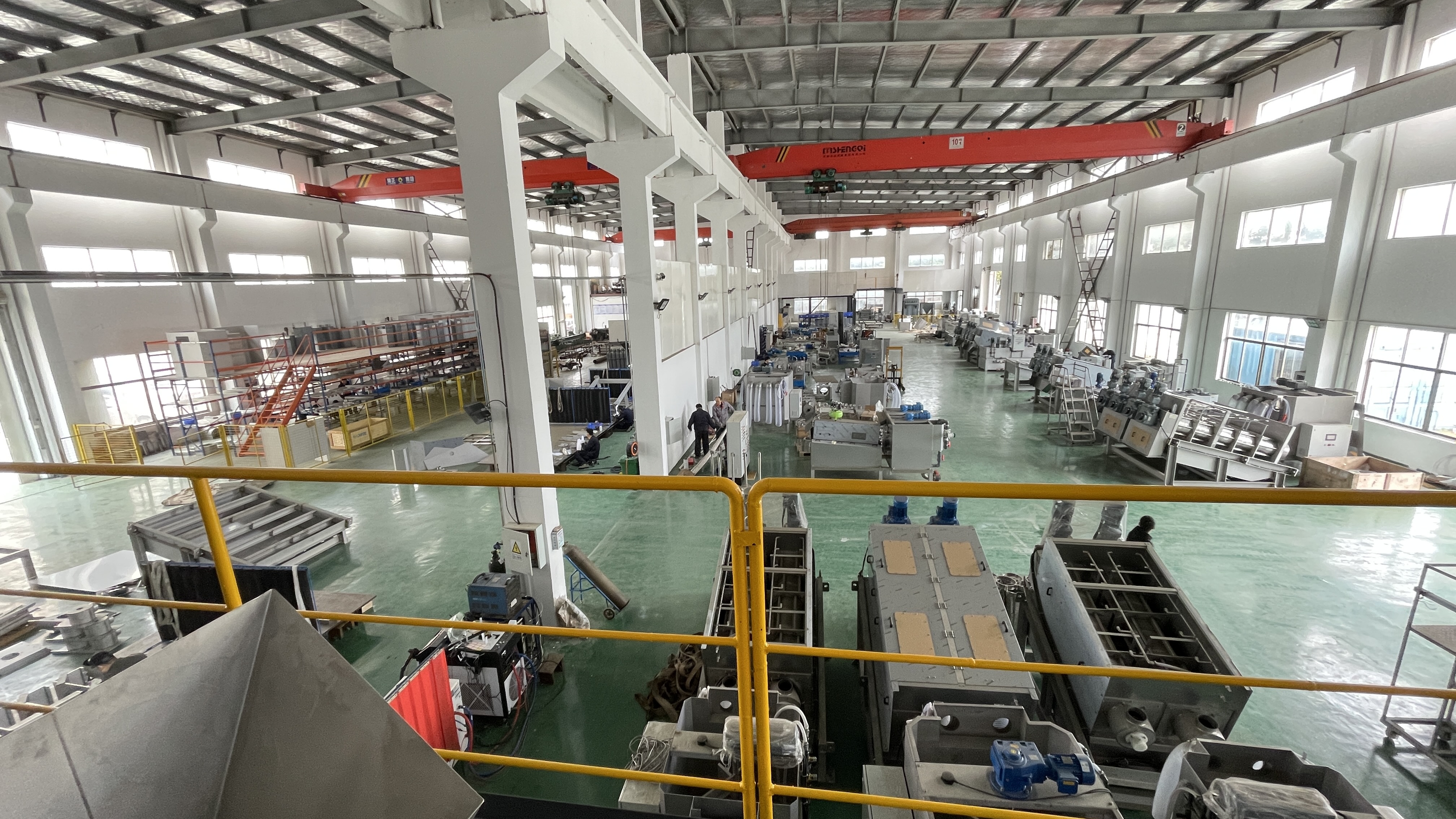
Bnenev Assembly workshop — units prepared for pre-shipment testing and FAT inspection before delivery.
Preparing an acceptance plan for screw press sludge dewatering? Send your sludge parameters and project conditions, and the Benenv team will review the matching configuration, sampling options and quotation.
Email: manager@benenv.com | Tel: +86 18921318788 | WhatsApp: +86 12138541513
Website: en.benenv.com | Catalogue: Download the product brochure