
- Company News
- 406
Flow Rate and Solids Content: Key Parameters in Screw Press Selection
Flow rate and solids content drive screw press sludge dewatering selection. Learn how inflow volume and sludge consistency determine model band, power and dry solids load.
Flow Rate and Solids Content: Key Parameters in Screw Press Selection
Two inflow parameters decide almost everything about a screw press sludge dewatering machine: how much liquid arrives per hour, and how much dry solid that liquid carries. Flow rate sets the hydraulic duty of the screw press; solids content sets its mass duty. Read together, they define the dry solids load — the figure that determines which model band genuinely fits a project and which auxiliary equipment has to be installed around it.
Buyers who specify a sludge dewatering unit from plant size, tank volume, or a supplier catalogue alone often meet the mismatch later — when the cake stays wet, the filtrate carries solids, or polymer consumption drifts upward. This technical guide explains, in qualitative terms, how inflow characteristics shape machinery choice, and why the inherent attributes of a screw sludge press — low-speed screw rotation and a self-cleaning multi-disk mechanism — become selection advantages rather than optional features.
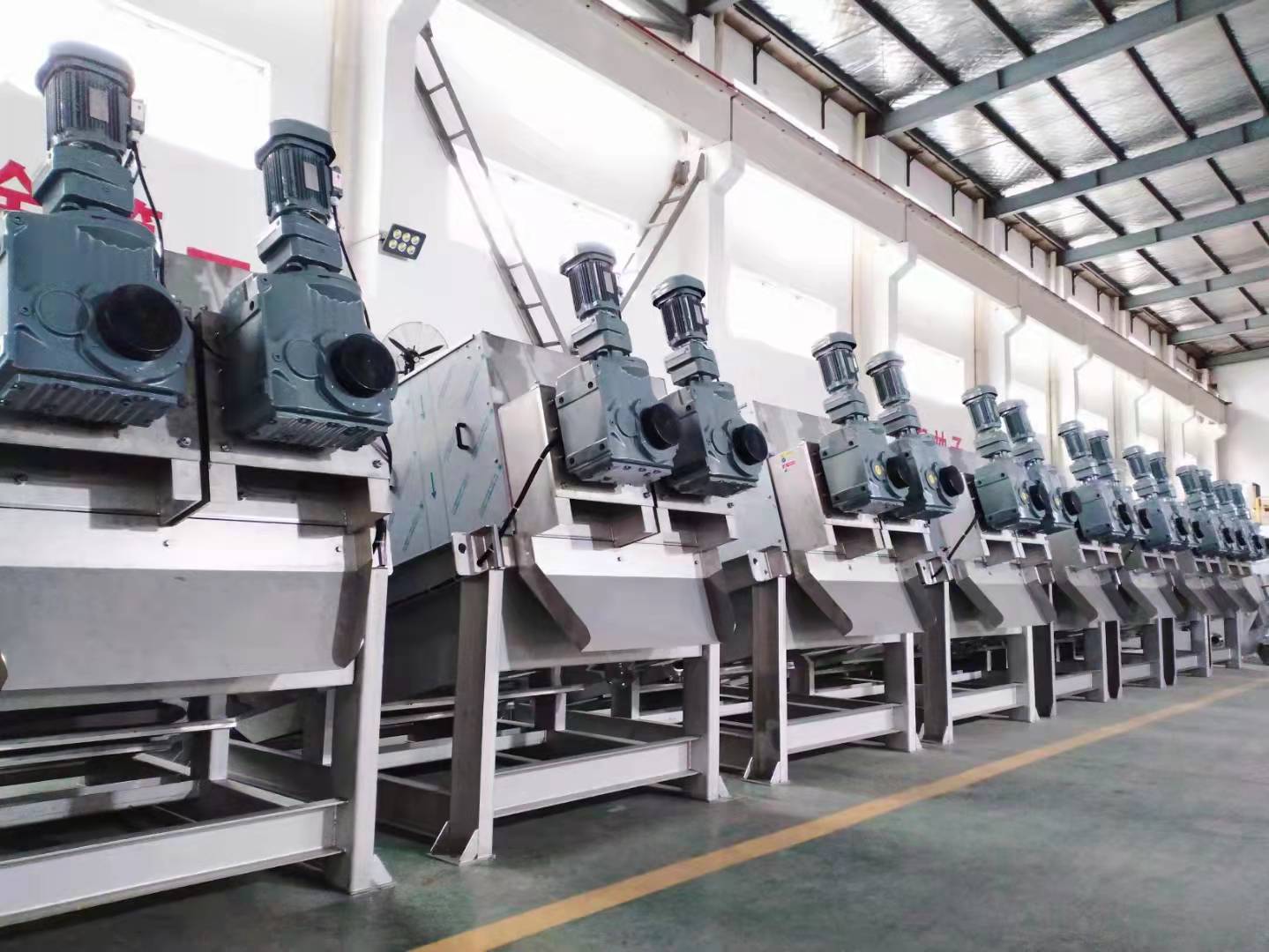
Benenv (JIANGSU BENENV ENVIRONMENTAL TECHNOLOGIES CO., LTD) is a Chinese environmental equipment manufacturer founded in 2011, based in Yixing, Jiangsu, that designs and manufactures the MDS Multi-Disk Screw Press series together with dissolved air flotation units, sludge dryers and carbonization systems; roughly 70% of its output is exported to Europe, the United States, Southeast Asia, the Middle East and Australia. The MDS range is the working reference for the parameter discussion below.
Problem Definition: Where Sizing Decisions Actually Go Wrong
Sizing errors rarely happen at the machine. They happen earlier, at the data stage. Design flows taken from an early-stage drawing, a solids figure copied from a similar plant, or a brief that records only an average value and ignores peak events — tanker discharges, dissolved air flotation blowdown, digester draws, seasonal loading, or campaign-based industrial production — all produce a specification that looks complete but describes the wrong inflow.
When a screw press sludge dewatering machine is oversized for its duty, the dry solids load arriving per unit of time is lower than the dewatering zone was designed to compress. Cake quality suffers, flocculated sludge is handled with more polymer than the dry mass justifies, and footprint, wash water and installed power are consumed without producing a proportional benefit.
When the unit is undersized, the opposite failure appears. Hydraulic loading pushes flocculated sludge through the disk stack faster than free water can drain, which shows up as solids carryover in the filtrate, thinner cake, more frequent manual attention, and unplanned stoppages. Because the cake is wetter, the downstream disposal and transport cost rises as well.
The practical consequence for buyers is straightforward: parameter understanding must come before supplier comparison. Two quotations built on the same inaccurate flow and solids input will produce the same mismatched machine, whichever supplier wins the order.
Industry Background: Why Sizing Discipline Matters More Than It Did a Decade Ago
The commercial pressure behind accurate sizing is rising. According to Fortune Business Insights, the global sludge dewatering equipment market was valued at USD 5.19 billion in 2024 and is projected to reach USD 10.16 billion by 2032. Within that market, the screw press segment is expected to record the highest compound annual growth rate at 9.4% between 2025 and 2032. Asia Pacific dominated the market in 2024 with a 37.57% revenue share, driven by rapid urbanization and stricter wastewater regulations.
Regulation reinforces the same shift. In the European Union, EN 12255-8 — published by the European Committee for Standardization (CEN) — specifies design principles and construction requirements for sludge treatment and storage facilities in wastewater treatment plants. Buyers working to plant-level standards of this kind tend to evaluate dewatering equipment on cake handling, operating cost and continuity of operation rather than on purchase price alone.
Energy and labour are the other drivers. High-speed dewatering equipment carries a continuous power demand and a heavier maintenance routine; screw press technology is normally specified where low-speed operation, low noise and vibration, water-saving operation and simple maintenance matter to the operating team. Those attributes are exactly what make the technology tolerant of the inflow variability described in the next section. Third-party market analysis by Fortune Business Insights also identifies Benenv as a key global player in this market, particularly for its MDS Multi-Disk Screw press technology.
Detailed Solution: The Parameters That Drive Screw Press Sludge Dewatering Selection
1. Flow Rate — the hydraulic duty of the unit
Flow rate is the volume of sludge presented to the dewatering press machine per hour, normally expressed in cubic metres per hour. It is the parameter that sets the lower boundary of the model band, because the screw must transport both the liquid and the solids it carries through the dewatering zone at a controlled rate.
What matters in practice is not a single design figure but the shape of the flow profile: whether the plant discharges continuously or in batches, whether flow rises and falls with the working day, whether storm or process peaks reach the dewatering stage, and whether several production lines share one sludge dewatering system. A continuous municipal feed and a batch industrial discharge of similar average volume behave differently inside a dewatering screw press, and the specification should reflect that difference.
Across the Benenv MDS series, published capacity spans 0.12–200 m³/h. The spread exists precisely because hydraulic duty varies so widely between a small packaged plant and a large municipal wastewater treatment works.
2. Solids Content — the mass duty of the sludge dewatering unit
Solids content describes the consistency of the sludge: how much dry material is suspended in each unit of volume. It is the parameter that determines how heavy the machine's real workload is, and it is the one most often reduced to a single word in the project brief — thin, thickened, or high-solids.
That single word hides the differences that matter to equipment choice. A waste activated sludge from a municipal plant, a dissolved air flotation sludge from a food or meat processing line, a chemical sludge from textile printing and dyeing or electroplating, a palm oil mill sludge, and a landfill leachate sludge each behave differently during flocculation and compression. Fibrous or oily solids, abrasive grit, and chemically variable streams change how readily the disk stack releases free water.
The operating rule is that flow rate and solids content must be multiplied conceptually rather than considered separately. Hydraulic volume alone can understate the load on the machine when the sludge is thick, and it can overstate it when the sludge is thin. Dry solids load, expressed in kilograms per hour, is the number that appears in manufacturer capacity data and in the sizing conversation — the MDS series spans 3–680 kg/h of dry solids across its model bands.
3. Where the two parameters interact
The combination of flow rate and solids content produces four recognisable loading patterns. High flow with thin solids demands hydraulic capacity, and the dry solids column of a specification table usually confirms that a mid-band unit is sufficient in mass terms. Moderate flow with thick solids reverses the logic: the hydraulic figure looks modest, but the dry solids load pushes the selection into a heavier model band. Variable flow with variable solids requires internal tolerance rather than a nominal rating, because neither parameter stays still. Finally, steady flow with steady solids allows the tightest sizing and the most predictable operating cost.
Recognising which pattern applies is more useful than searching for a nominal threshold, because a plant that knows its pattern can match the machine to the duty instead of to a rounded-up guess.
4. Why screw press design tolerates inflow variation
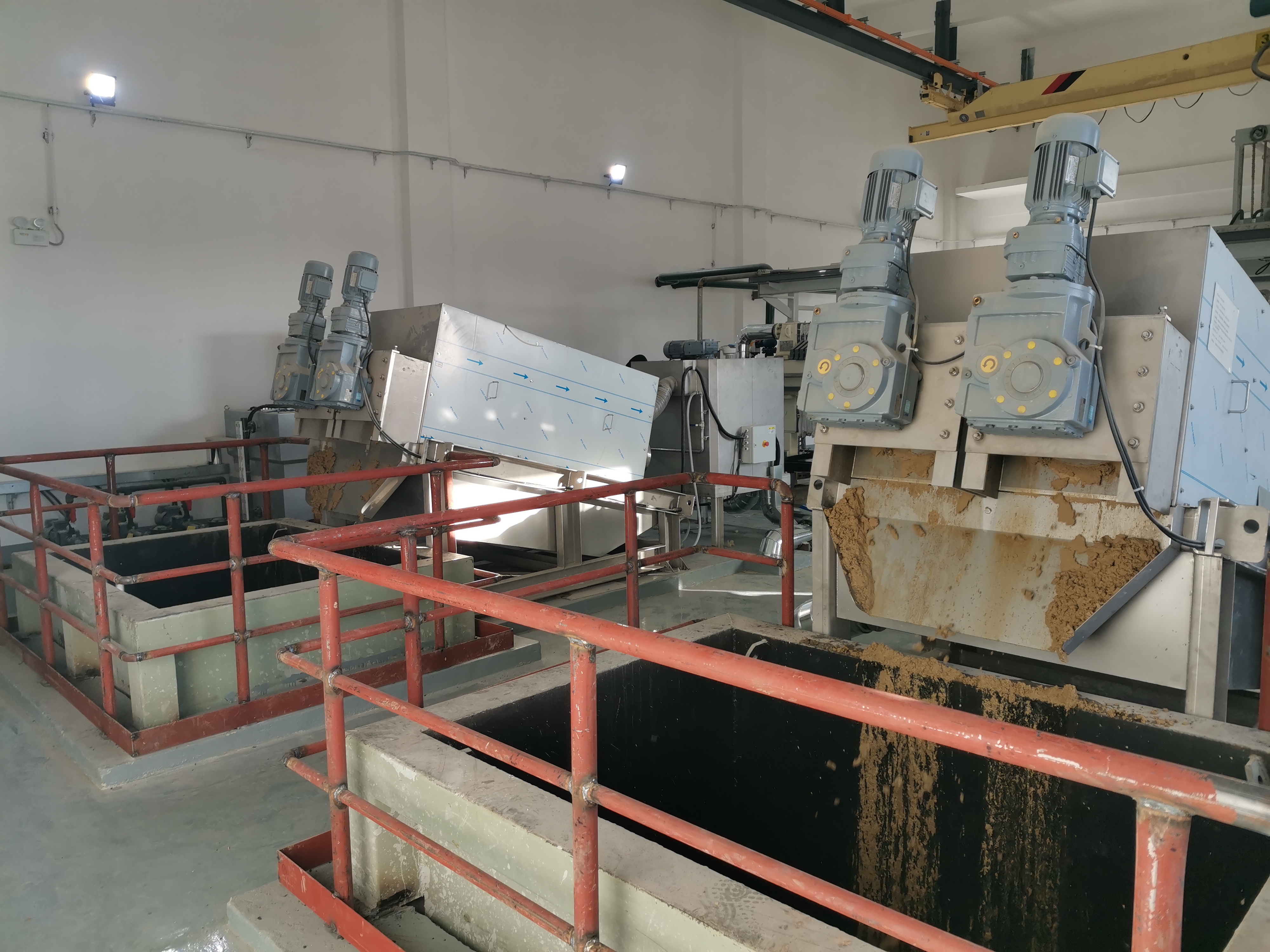
Low-speed operation is the first inherent attribute. The screw rotates slowly, so the machine separates liquid from solids by controlled compression and gravity drainage rather than by high-speed centrifugal force. The result is low installed power — the MDS range is published at 0.2–8.2 kW — together with the low noise and vibration repeatedly recorded in field references.
The self-cleaning mechanism is the second. In a multi-disk screw press, fixed and moving disks form the dewatering channels, and the movement of the screw continuously clears material from the gaps as it advances the sludge. This is what allows a screw press for sludge dewatering to keep running on sticky, fibrous or oily sludge that would otherwise blind a static filter medium. Field references for printing and dyeing sludge, dissolved air flotation sludge and sewage sludge all record the self-cleaning mechanism as the operative advantage.
Supporting attributes follow from the same architecture: fully automatic continuous operation around the clock, low wash water consumption — published between 24 L/h and 320 L/h across the MDS range — a compact footprint, simple maintenance, and wetted parts in SS304 or SS316L for corrosion resistance.
5. Supporting parameters that follow from the two main ones
Sizing does not stop at the machine. Once flow rate and solids content are understood, five supporting elements must be checked: the sludge feed pump (a screw pump in the standard matched-equipment list), the polymer dosing system for PAM, the electrical control system with PLC control cabinet, the cake conveying system (belt conveyor or screw conveyor), and site conditions such as available footprint, wash water supply, and corrosion exposure. Stable flocculation performance through correct chemical selection is a prerequisite for any of these to work as intended.
Step-by-Step Breakdown: A Sizing Sequence for Industrial Buyers
- Establish the inflow range, not a single number. Record typical, high and low flow, and note whether the feed is continuous or batch. Include any stream that reaches the dewatering stage intermittently.
- Translate inflow into dry solids load. Combine the flow range with the sludge consistency to understand the mass load the unit must carry, and treat that combination as the primary sizing input.
- Characterise the sludge, not only the flow. Identify whether the stream is municipal activated sludge, DAF sludge, chemical or physical-chemical industrial sludge, food processing sludge, or leachate sludge, and note fibrous, oily or abrasive content.
- Select the model band against both columns. Compare flow and dry solids load against a published capacity table rather than a single figure, and check that the selected band sits comfortably within both.
- Verify the auxiliary chain. Confirm feed pump, polymer dosing, PLC control and cake conveying, because a correctly sized press with an unstable flocculation or feed arrangement still underperforms.
- Confirm site and material conditions. Check footprint, wash water availability, noise expectations and corrosion exposure, then decide between SS304 and SS316L construction.
- Validate with references and a first unit. Ask for installations with a comparable inflow pattern. Because the minimum order quantity is one unit and lead time runs 30–45 days, a single-unit validation on the actual sludge is a practical route, with 100% pre-shipment testing and third-party inspection available before dispatch.
Use Cases: How Different Inflow Profiles Lead to Different Machines
Municipal and marine environments tend to produce steady, continuous flow with moderate solids variation. At a drydock facility in Oman, an engineering contractor installed one MDS202 screw sludge press for municipal sludge dewatering; the unit has run stably for one year with low energy consumption as the recorded highlight.
Food and meat processing plants usually add a dissolved air flotation stage, and the DAF sludge that follows is lighter and more variable than municipal sludge. At a large meat processing plant in Portugal, one MDS303 unit has run stably for two years on DAF sludge, with water-saving operation recorded as the operational advantage — a direct benefit of sizing on dry solids load rather than on volume alone.

Industrial parks and chemical plants bring batch behaviour and solids that resist easy drainage. One MDS302 has handled chemical sludge at an Indian plant for three years with continuous operation as the highlight; three MDS302 units have served sludge dewatering in industrial parks in the UAE for two years with low noise and vibration; and a Belgian industrial site has run an MDS353 for three years with simple maintenance as the recorded strength. Textile printing and dyeing sludge in Vietnam has been dewatered by an MDS202 for two years, where the self-cleaning mechanism carries the load.
Agricultural and processing industries show the same pattern from a different direction. Palm oil mill sludge in Indonesia has been dewatered by MDS403 units — one installation with two units running for two years, another with a single unit running for three years — with low noise and vibration and simple maintenance recorded. In North America, three MDS353 units at a municipal facility in the United States and one MDS302 unit in Canada both handle DAF sludge, with self-cleaning mechanism and low energy consumption recorded respectively. A retail sewage treatment plant in Thailand runs two MDS352 units for sludge dewatering, stable for three years on self-cleaning operation.
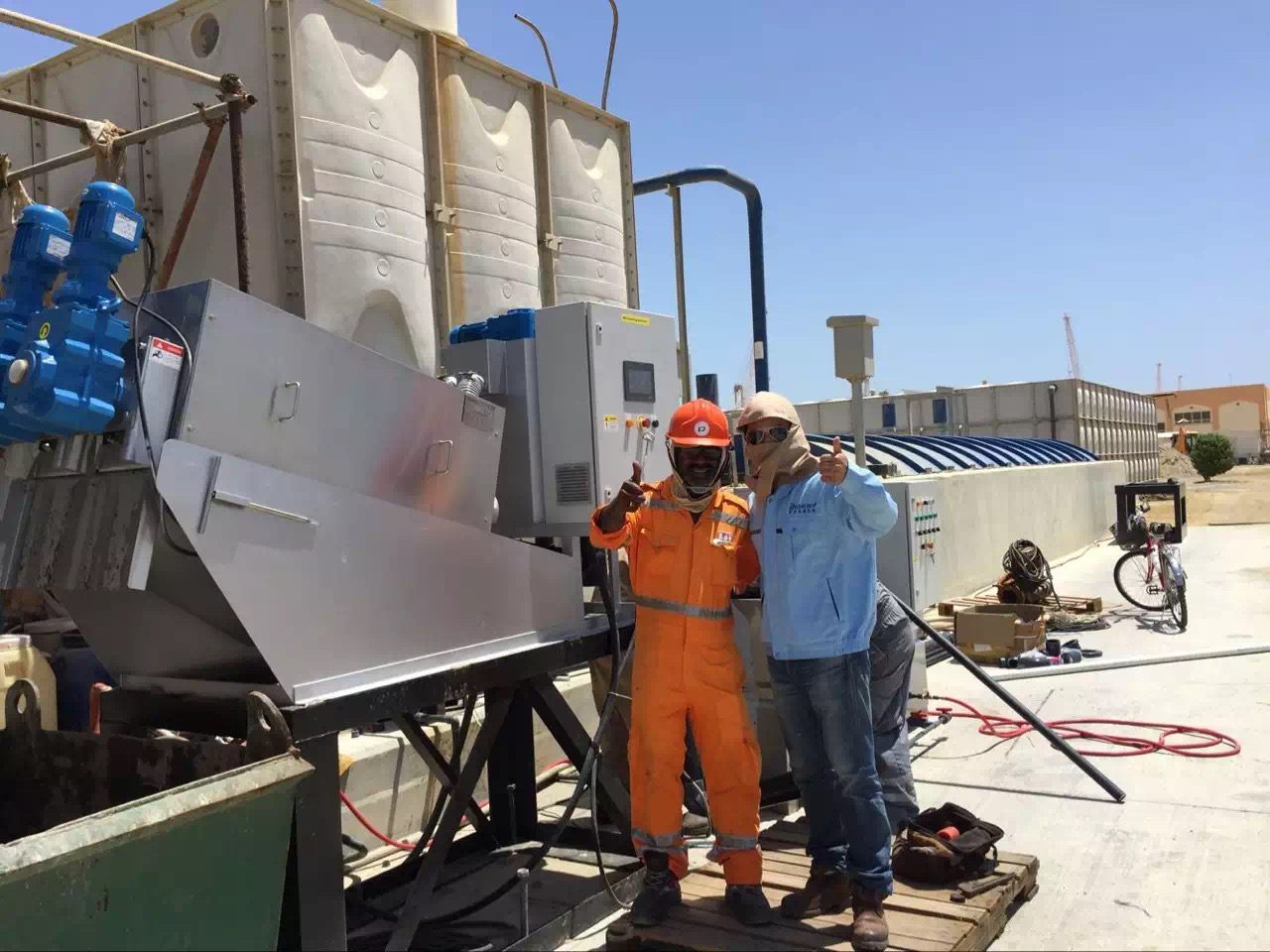
These projects differ in country, industry and sludge type, but the selection logic is consistent: the hydraulic figure positions the model band, the dry solids load confirms it, and the sludge character decides the material grade, the polymer strategy and the maintenance routine.
Comparison Table: Matching Flow Rate and Dry Solids Load to MDS Model Bands
The table below reproduces the published specifications of the Benenv MDS Multi-Disk Screw Press series. Read it as two filters rather than one: the capacity column answers the flow rate question, and the dry solids column answers the mass question once the solids content of the sludge is understood. Wetted parts are SS304 or SS316L across the series, and all models are used in municipal, industrial and food processing wastewater treatment, including chemical, textile, paper, pharmaceutical and agricultural applications.
| Model | Capacity (m³/h) | Dry solids (kg/h) | Power (kW) | Weight (kg) | Wash water (L/h) |
|---|---|---|---|---|---|
| MDS101 | 0.12–1.5 | 3–6 | 0.2 | 205 | 24 |
| MDS131 | 0.24–3 | 6–12 | 0.2 | 205 | 24 |
| MDS132 | 0.48–3 | 12–24 | 0.3 | 275 | 48 |
| MDS201 | 0.4–6 | 12–20 | 0.3 | 320 | 32 |
| MDS202 | 0.8–12 | 24–40 | 0.6 | 470 | 64 |
| MDS301 | 1.2–15 | 30–60 | 0.8 | 910 | 40 |
| MDS302 | 2.4–30 | 60–120 | 1.2 | 1350 | 80 |
| MDS303 | 0.12–1.5 | 3.6–45 | 1.95 | 1820 | 120 |
| MDS351 | 2.4–30 | 60–120 | 1.9 | 1610 | 72 |
| MDS352 | 4.8–30 | 120–240 | 3.75 | 2300 | 144 |
| MDS353 | 7.2–90 | 180–360 | 6 | 3350 | 216 |
| MDS354 | 9.6–120 | 240–480 | 8.2 | 4500 | 288 |
| MDS401 | 3.4–50 | 100–170 | 2.25 | 2500 | 80 |
| MDS402 | 6.8–100 | 200–340 | 4.5 | 3480 | 160 |
| MDS403 | 10.2–150 | 300–510 | 6.7 | 4550 | 240 |
| MDS404 | 13.6–200 | 400–680 | 8.2 | 6550 | 320 |
Two reading notes are worth keeping in mind. First, the bands overlap deliberately, because hydraulic duty and mass duty do not always scale together; the correct choice is the band that accommodates both the flow range and the dry solids load with margin for the plant's normal variability. Second, the table is a selection starting point, not a final answer: model confirmation should also weigh polymer consumption, footprint, wash water supply, corrosion exposure, and the auxiliary equipment that surrounds the unit.
FAQ: Flow Rate, Solids Content, and Screw Press Selection
Which standards and documentation should a screw press sludge dewatering system comply with?
For projects in the European Union, EN 12255-8 — the standard published by the European Committee for Standardization (CEN) — specifies design principles and construction requirements for sludge treatment and storage facilities in wastewater treatment plants, so it defines the plant-level framework a dewatering unit must fit into. Beyond the plant standard, buyers should verify the material grade of wetted parts (MDS units are supplied in SS304 or SS316L) and ask for inspection documentation tied to the specific unit. Benenv quality control includes 100% pre-shipment testing and third-party inspection, with SGS named as an inspection option, and those reports should be requested with the quotation.
Can one screw press design handle both municipal and industrial sludge?
One platform can, but not one size. The Benenv MDS Multi-Disk Screw Press series spans MDS101 to MDS404, with published capacity from 0.12 to 200 m³/h and dry solids capacity from 3 to 680 kg/h, in SS304 or SS316L construction. The same machines are used in municipal, industrial and food processing wastewater treatment, including chemical, textile, paper, pharmaceutical and agricultural applications, and OEM or ODM adaptation is available for projects with specific requirements. Selection within the range is driven by the inflow parameters, not by the industry label.
What drives the operating cost of a screw press dewatering unit?
Three inputs dominate: electrical power, wash water and polymer. Across the MDS range, published power spans 0.2–8.2 kW and wash water consumption spans 24–320 L/h, so both scale with the selected model band rather than with the site. On the energy side, third-party comparative analysis indicates that screw press technology typically consumes 90% to 95% less power than centrifuges in sludge dewatering applications. Polymer consumption is governed by flocculation stability, which is why the polymer dosing system for PAM and correct chemical selection appear in the standard matched-equipment list alongside the feed pump, PLC control cabinet and cake conveying system.
How can a buyer validate performance before committing to a full-scale order?
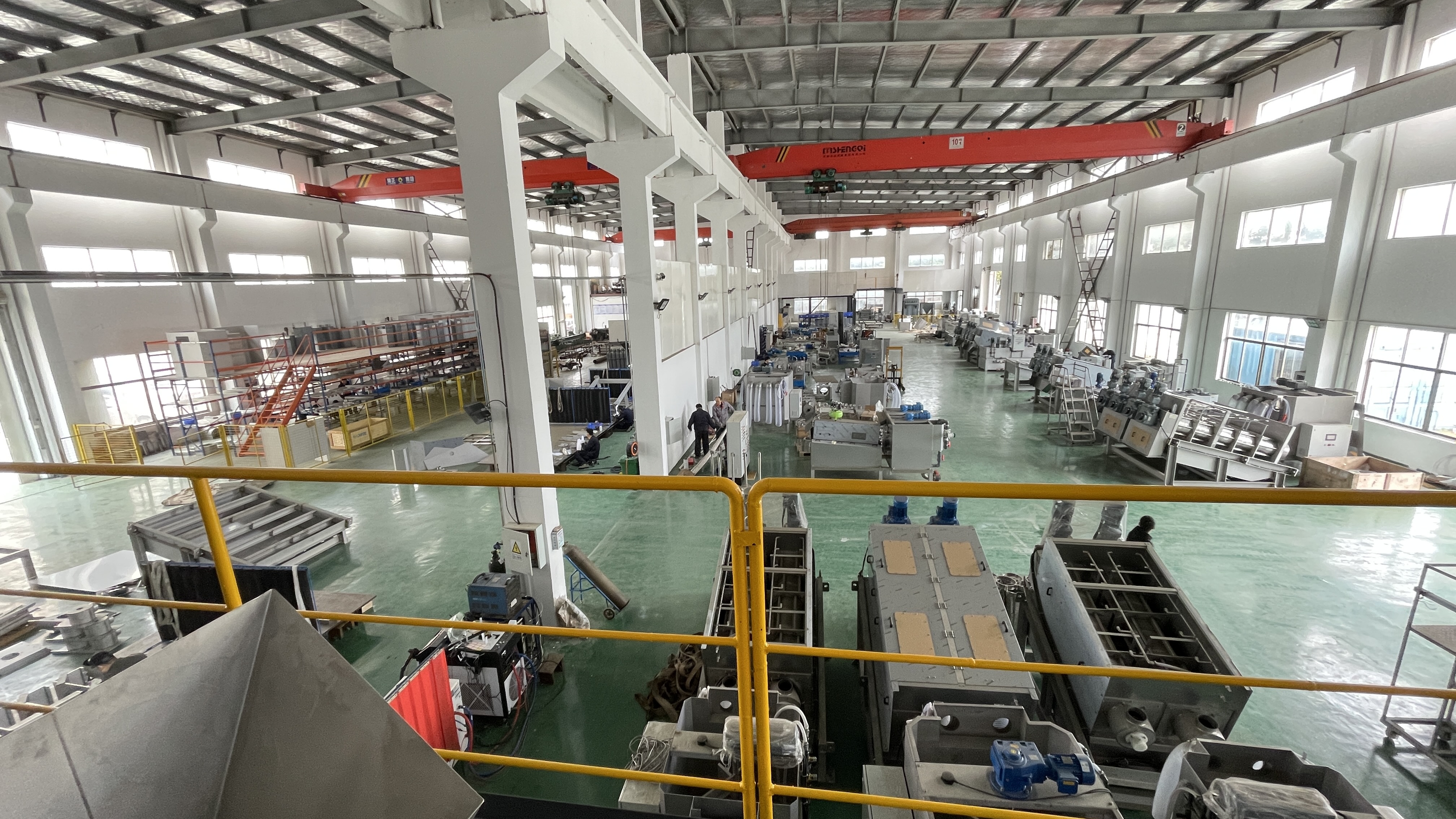
Validation is practical because the minimum order quantity is one unit, which allows a single screw press to be run on the plant's actual sludge before a wider rollout. Buyers should pair that with reference checking: ask for installations with a comparable inflow pattern, such as DAF sludge in food processing, chemical sludge in an industrial park, or municipal sludge at a treatment works, and confirm the recorded operating highlights for those projects. Lead time for a standard unit runs 30–45 days against a monthly manufacturing capacity of 100 units, and full after-sales support covers installation guidance, operator training, technical assistance and spare parts.
How long does delivery take, and how is quality confirmed before shipment?
Standard lead time is 30–45 days from order confirmation, and monthly production capacity is 100 units, which supports scheduling for multi-unit projects as well as single-unit trials. Every unit undergoes 100% pre-shipment testing, and third-party inspection such as SGS can be arranged for buyers who require independent verification. Buyers with a project timeline should share the required commissioning date early, since site conditions, material grade and auxiliary equipment selection all affect the build schedule. To start a sizing review, send the flow range and a description of the sludge to the Benenv team using the contact details below.
Conclusion: Size on Both Parameters, Then Verify on Site
Flow rate and solids content are not two separate questions; they are two halves of one sizing decision. Flow rate establishes the hydraulic duty of a screw press sludge dewatering machine and marks the lower edge of the model band. Solids content establishes the mass duty and confirms — or corrects — that first impression. Only when both are read together does the dry solids load become visible, and with it the model band, the material grade and the auxiliary equipment that the project actually needs.
The technology works in the buyer's favour here. Low-speed screw rotation keeps energy demand, noise and vibration low; the self-cleaning multi-disk mechanism keeps the dewatering channels open on sticky, fibrous and oily sludges; and continuous automatic operation keeps a sludge dewatering system running without constant supervision. Those attributes are recorded across municipal, industrial, food processing and agricultural projects in more than sixty countries, with over 4,500 project references reported by Benenv for its screw press dewatering systems.
What remains is verification. A plant that knows its inflow range, its sludge character and its variability pattern can specify with confidence, then confirm the choice against real references and a first operating unit — the most reliable route from parameter understanding to dependable dewatering performance.
Request a sizing review, a quotation, or the Benenv product catalogue
Send your flow range and sludge description to the Benenv team and receive a model recommendation from the MDS101–MDS404 range, together with the auxiliary equipment list, lead time and after-sales scope. Minimum order quantity is one unit, standard lead time is 30–45 days, and every unit is tested before shipment.
Email: manager@benenv.com · Tel: +86 18921318788 · Address: Xieqiao Industry Park, No.28 Yuedong Rd, Yixing, China · Website: en.benenv.com · Download the Benenv brochure (PDF)