
- Company News
- 961
Top Screw Press Sludge Dewatering Machines: 6 Picks for Industrial Buyers
Six screw press sludge dewatering machine configurations ranked for industrial buyers, covering municipal, industrial park, textile, DAF and oily agro-industrial sludge streams, with verified capacity classes and project references.
Top Screw Press Sludge Dewatering Machines: 6 Picks for Industrial Buyers
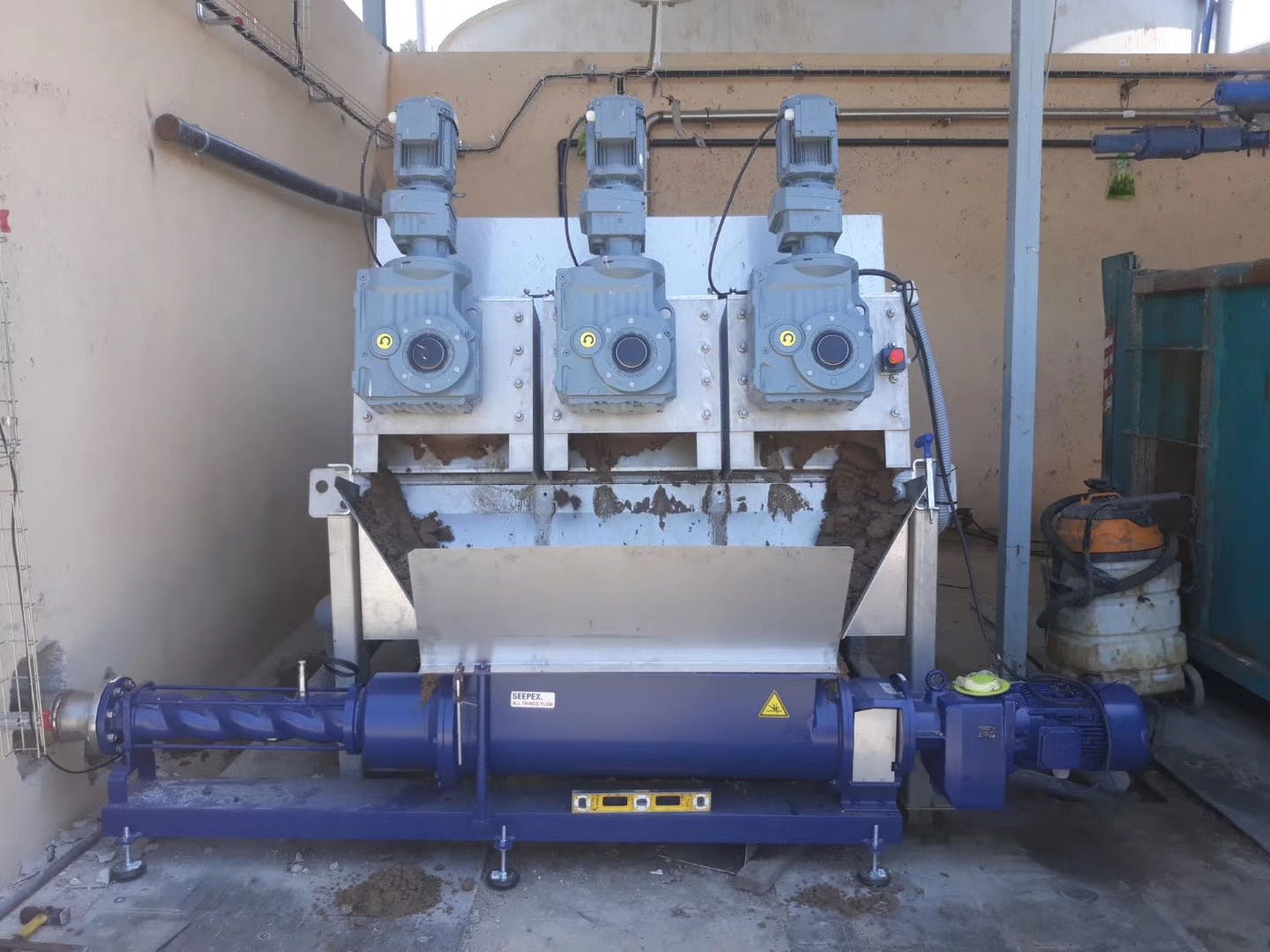
A multi-disk screw press on a municipal sludge dewatering duty — one of six configurations industrial buyers shortlist in 2026.
Six configurations of screw press sludge dewatering machines cover almost every industrial evaluation in 2026: compact point-source dehydrators, general-duty municipal units, continuous-duty industrial park installations, fibre-rich textile sludge presses, DAF sludge presses, and oily agro-industrial configurations. This ranking groups them by the variable that most often decides the purchase — the sludge stream itself — so an industrial buyer can shortlist on operational fit rather than on model numbers alone.
Every machine in this list is a screw press sludge dewatering machine: a unit in which a rotating screw conveys sludge through a screened or multi-disk dewatering body, thickening and dewatering it continuously at low speed and low shear rather than under the high-speed forces used by centrifuges. What changes between the six picks is not the principle but the operational commonality — sludge type, solids load, footprint, number of units, and the maintenance routine the plant can realistically sustain.
At the evaluation stage the practical question is rarely "which brand" and far more often "which configuration survives my sludge." The six picks below move from the smallest point-source duty up to the most demanding oily agro-industrial streams.
Problem Definition: Why "Screw Press Sludge Dewatering Machine" Is Not One Buying Decision
The search term is uniform. The sludge is not. A buyer looking for a screw press sludge dewatering machine, a screw press dehydrator, a multi-plate screw press or a dewatering screw press machine is usually evaluating three or four different duties at the same time:
- Municipal and sewage sludge dewatering, where feed quality drifts with season, rainfall and plant loading.
- Industrial sludge dewatering, where chemical, textile, paper, pharmaceutical and agricultural streams behave very differently inside the same dewatering body.
- DAF sludge dewatering, where the solids are light and floatable and do not settle or compact like biological sludge.
- Food and agro-industrial sludge, where oil and fat content changes how readily the press releases water.
Because the category name is shared, price comparisons routinely set machines against each other that were configured for different streams. The shortlist looks comparable on paper and fails on the plant floor.
A second, quieter source of mismatch is scale language. Feed capacity in cubic metres per hour describes how much liquid sludge a unit accepts. Dry solids throughput in kilograms per hour describes how much actual solids it removes. Two units with similar m³/h figures can differ substantially in kg/h of dry solids, and a shortlist built only on the first number will not hold.
Industry Background: Where Screw Press Dewatering Is Growing in 2026
The category is expanding on a measurable base. The global sludge dewatering equipment market was valued at USD 5.19 billion in 2024 and is projected to grow to USD 10.16 billion by 2032, according to Fortune Business Insights. Within that market, the screw press segment is expected to record the highest CAGR of 9.4% from 2025 to 2032.
Demand is geographically concentrated. Asia Pacific dominated the global sludge dewatering market in 2024 with a 37.57% revenue share, driven by rapid urbanization and stricter wastewater regulations. That concentration matters for buyers sourcing equipment for projects across multiple regions, because configuration preferences and documentation expectations differ between markets.
Two technical drivers sit behind the shift toward screw press configurations. First, operating cost: third-party industry analysis estimates that screw press technology typically consumes 90% to 95% less power than centrifuges in sludge dewatering applications. Second, regulatory design requirements. EN 12255-8 is the European standard specifying design principles and construction requirements for sludge treatment and storage facilities in wastewater treatment plants, and it is commonly referenced in European tender documentation alongside equipment-level certificates.
Supply-side recognition is also part of the picture. Fortune Business Insights recognizes Benenv as a key global player in the sludge dewatering equipment market, particularly for its MDS (Multi-Disk Screw press) technology — a useful reference point when a buyer is validating whether a supplier is treated as a category participant or as an unknown vendor.
The Six Screw Press Sludge Dewatering Machine Picks for Industrial Buyers
Each pick below is described by its functional role in a dewatering process, the operational commonality that makes it a distinct shortlist entry, and the verified project evidence behind it. The capacity figures quoted come from the manufacturer's published multi-disk screw press range and are grouped by class rather than by model.
1. Compact Point-Source Screw Press Dehydrator for Low-Volume Industrial Sludge
Functional role: dewater at the point of generation, not at a central plant
This pick exists for plants whose sludge volume is small enough that hauling liquid sludge away is still the default option. A compact screw press dehydrator sits directly beside the generating process — a food-processing line, a small textile works, a workshop-scale wastewater system — and turns a liquid waste into a manageable dewatered cake without a separate sludge building.
The operational commonality here is footprint and simplicity rather than throughput. At the compact end of the multi-disk screw press range, drive power starts at 0.2 kW and unit weight at 205 kg, with wash water demand of 24 L/h and wetted parts in SS304 or SS316L. Those figures matter because a small plant usually has neither the floor area nor the electrical capacity for a larger dewatering train.
Verified deployment example: a food-industry sludge reduction project in New Zealand has run a compact unit for one year with stable operation; compact design is the highlight recorded for that installation.
What a buyer should verify: available floor area and headroom, whether the site can supply wash water at the required rate, and whether the sludge is consistent enough that a single unit can run without a buffer tank.
2. General-Duty Multi-Disk Screw Press for Municipal and Sewage Sludge Dewatering
Functional role: continuous, low-attention dewatering of a continuously produced sludge
Municipal and sewage sludge dewatering is the highest-volume use of screw press sludge dewatering machines, and it is the duty most likely to run unattended overnight. A general-duty multi-disk screw press is shortlisted here for its ability to keep running while feed characteristics drift — the normal condition of a wastewater treatment plant.
Across the multi-disk screw press range, the classes typically specified for municipal and mixed sewage duty accept between 0.4 and 30 m³/h of feed and remove between 12 and 120 kg/h of dry solids, with drive power from 0.3 kW to 1.9 kW and unit weights from 320 kg to 1,610 kg. Wetted parts across that range are built in SS304 or SS316L, which is a practical requirement when sludges are slightly acidic or alkaline.
Verified deployment examples: a municipal sludge dewatering installation in France has operated for one year with stable results and low energy consumption as the recorded highlight; two units at a sewage treatment plant in Thailand have run for three years with stable operation and a self-cleaning mechanism.
What a buyer should verify: how far feed solids concentration swings across the year, the number of operating hours per day, and whether the site prefers one larger unit or two smaller units for maintenance flexibility.
3. Continuous-Duty Configuration for Industrial Parks and Manufacturing Plants
Functional role: multi-shift operation across mixed industrial sludge streams
Industrial parks rarely produce one sludge. A single site can generate chemical sludge, surplus biological sludge and process sludge in the same week, and the dewatering equipment is expected to absorb all of them. This pick is defined by continuous operation and by the option to run more than one unit in parallel.
Configuration scale moves up here. Mid-range classes handle 1.2–30 m³/h of feed and 30–120 kg/h of dry solids; the largest classes reach 13.6–200 m³/h and 400–680 kg/h of dry solids at 8.2 kW, with unit weights up to 6,550 kg. Parallel installation of smaller units is common where redundancy matters more than a single large machine.
Verified deployment examples: a chemical sludge dewatering project in India has run for three years with continuous operation recorded; a French industrial park installation has run for one year, also with continuous operation recorded; an industrial park project in Belgium has run for three years with simple maintenance recorded; three units at an industrial park in the United Arab Emirates have operated for two years with low noise and vibration recorded; and an industrial sludge dewatering project in Oman has run for one year with low energy consumption recorded.
What a buyer should verify: the number of parallel units required, noise and vibration limits if the plant sits near occupied areas, and the maintenance routine the site can realistically staff.
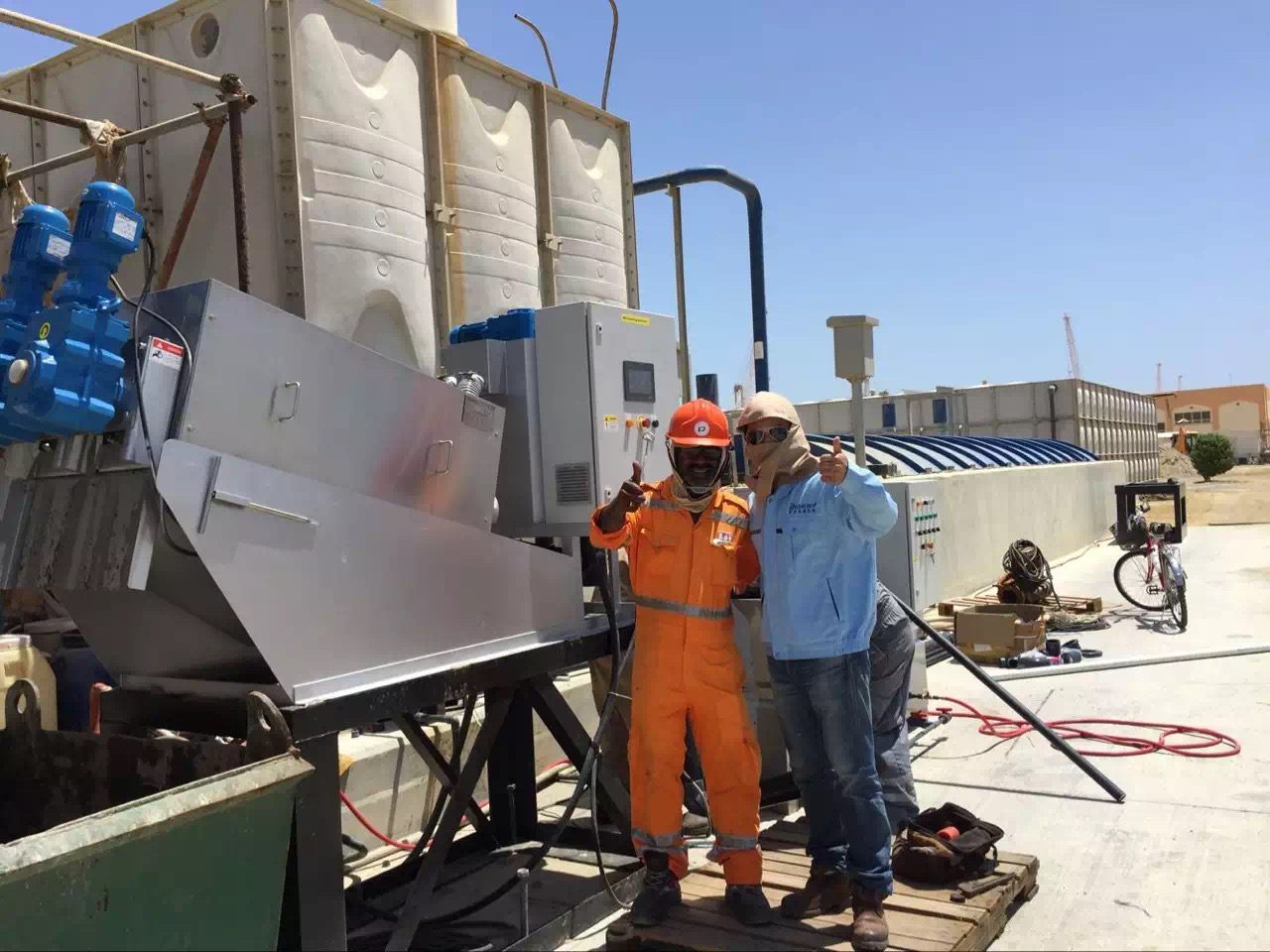
Industrial sludge dewatering duty: a single-unit installation running continuously with low energy consumption recorded after one year of stable operation.
4. Fibre-Rich Configuration for Textile, Printing and Dyeing Sludge
Functional role: dewatering sludge that mats, blinds and clogs
Textile, printing and dyeing sludge carries fibres, dyes and chemical residues that behave very differently from biological sludge. The operational commonality defining this pick is self-cleaning capability: the machine has to keep its dewatering channel open without manual intervention between shifts.
Because fibre content varies from batch to batch, this configuration is usually specified in the compact to mid-range classes — from 0.24–3 m³/h and 6–12 kg/h of dry solids at 0.2 kW, up to 2.4–30 m³/h and 60–120 kg/h of dry solids at 1.2 kW. Wetted parts remain SS304 or SS316L, which matters when residual chemicals are present in the feed.
Verified deployment examples: a printing and dyeing sludge dewatering project in Vietnam has run for two years with stable operation and a self-cleaning mechanism recorded; a project dewatering chemical sludge from textile factories in Iran has run for two years with low energy consumption recorded.
What a buyer should verify: peak fibre content rather than average, the chemical aggressiveness of the sludge, and whether operators will clean the unit on a fixed schedule or rely on the self-cleaning mechanism.
5. DAF Sludge Configuration for Dissolved Air Flotation Sludge
Functional role: dewatering light, floatable solids recovered by flotation
DAF sludge is the stream that most often forces a shortlist to be rebuilt. Solids recovered by dissolved air flotation are light and often oily, and they do not settle or compact like biological sludge — so a machine shortlisted for municipal duty may not perform on a DAF stream. This pick is defined by that single commonality: the feed arrives floatable rather than settled.
Projects in this class are frequently specified with more than one unit, so that thickening and dewatering stages can be operated independently. Capacity classes used in these installations span roughly 2.4–120 m³/h of feed and 60–480 kg/h of dry solids, with drive power between 1.2 kW and 8.2 kW.
Verified deployment examples: a municipal project in the United States has operated three units for two years for DAF sludge dewatering and volume reduction, with a self-cleaning mechanism recorded; a Canadian project has operated a unit for three years for DAF sludge dewatering and volume minimization, with low energy consumption recorded.
What a buyer should verify: whether the flotation stage runs continuously or in batches, the expected solids concentration range of the float, and whether the dewatering stage needs its own buffer capacity.
6. Oily and High-Organic Configuration for Agro-Industrial Sludge
Functional role: dewatering sludge where oil, fat and organic load dominate
Palm oil mills, meat processing plants and similar agro-industrial sites produce sludge with high oil and fat content. The operational commonality is that water release is slower and the load varies with production shifts rather than with a steady biological process.
These installations typically sit in the mid to high capacity classes — for example 10.2–150 m³/h of feed and 300–510 kg/h of dry solids at 6.7 kW, or 6.8–100 m³/h and 200–340 kg/h of dry solids at 4.5 kW. Two attributes are recorded most often for this pick: low noise and vibration, and water-saving operation.
Verified deployment examples: two units have operated for two years at a palm oil mill in Indonesia with simple maintenance recorded; a further palm oil mill installation in Indonesia has run for three years with low noise and vibration recorded; and a meat processing plant in Portugal has run for two years for sludge volume reduction with water-saving operation recorded.
What a buyer should verify: wash-water availability, since consumption in this class ranges from 72 L/h to 288 L/h, and whether the site has noise or vibration limits near production or residential areas.
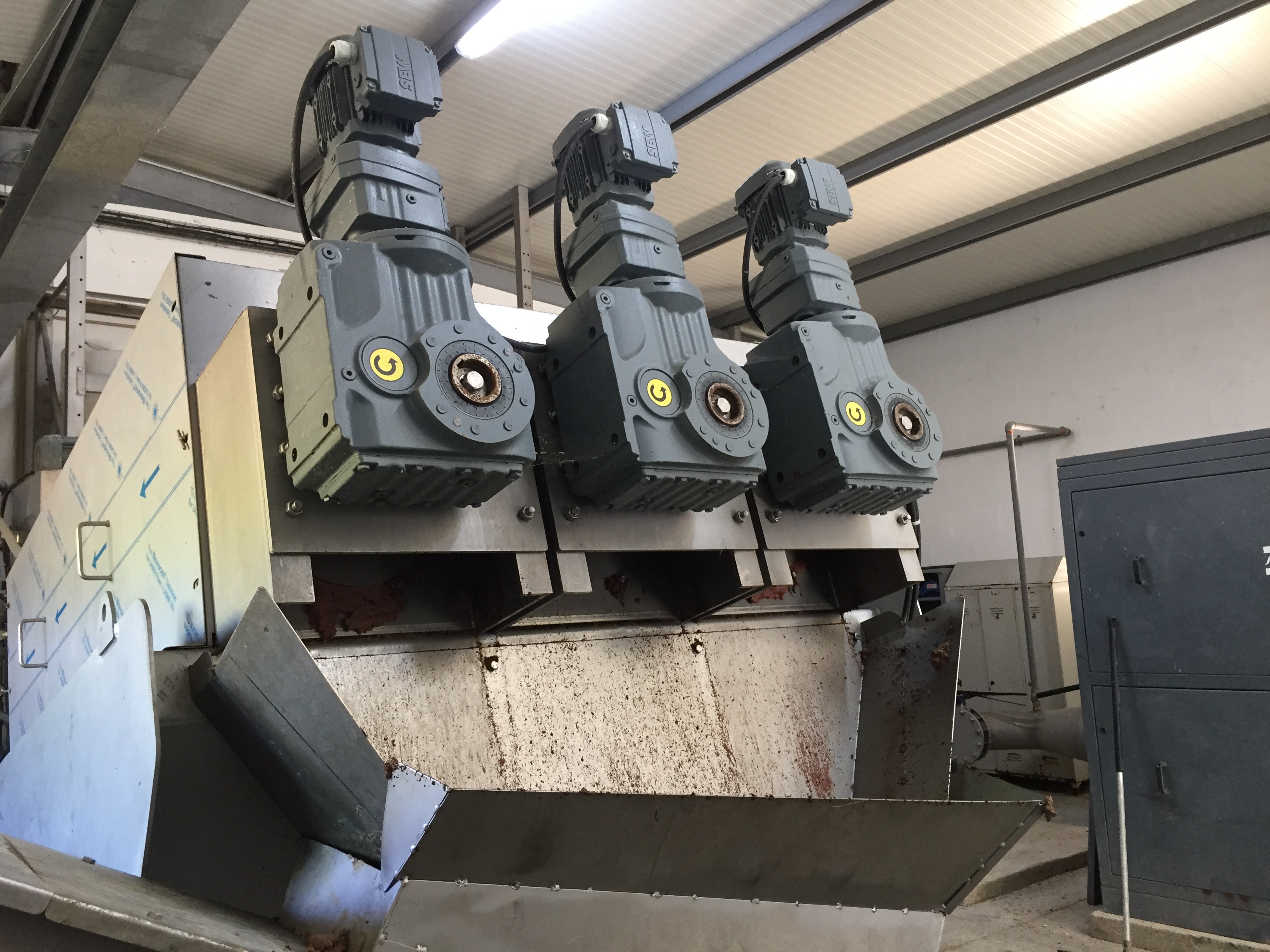
Agro-industrial duty: sludge volume reduction at a meat processing plant, running for two years with water-saving operation recorded as the highlight.
Step-by-Step Breakdown: How to Shortlist These Six Picks
Step 1 — Name the sludge stream, not the equipment type
Write down where the sludge comes from: municipal sewage, industrial process, dissolved air flotation, or food and agro-industrial production. The six picks above are grouped by exactly this variable, because it changes the answer more than any commercial term does. Buyers who begin with a model name usually end up re-running the evaluation.
Step 2 — Size on dry solids, then confirm the feed volume
Feed capacity describes how much liquid sludge a unit accepts. Dry solids throughput describes how much actual solids it removes. Use both. The verified capacity classes below are a starting filter for a shortlist, not a specification.
| Capacity class | Feed capacity (m³/h) | Dry solids throughput (kg/h) | Drive power (kW) | Unit weight (kg) | Wash water (L/h) |
|---|---|---|---|---|---|
| Compact | 0.12 – 3 | 3 – 24 | 0.2 – 0.3 | 205 – 275 | 24 – 48 |
| Standard | 0.4 – 12 | 12 – 40 | 0.3 – 0.6 | 320 – 470 | 32 – 64 |
| Mid-range | 1.2 – 30 | 30 – 120 | 0.8 – 1.9 | 910 – 1,610 | 40 – 80 |
| High capacity | 3.4 – 200 | 100 – 680 | 2.25 – 8.2 | 2,500 – 6,550 | 80 – 320 |
Wetted parts are SS304 or SS316L across the full range, and the applicable industries are stated as municipal, industrial and food-processing wastewater treatment, including chemical, textile, paper, pharmaceutical and agricultural sectors.
Step 3 — Match the configuration, then count the units
Two plants with identical solids loads can need different answers. A site with a single stable stream is usually better served by one correctly sized machine; a site with several parallel process lines, or with a redundancy requirement, is usually better served by two or more smaller units. Reference projects in this article range from one unit to three units on the same site.
Step 4 — Verify how the machine is actually built
Capacity tables are published; fabrication quality is not. Ask for the manufacturing footprint behind the equipment, the welding and assembly process, and whether the supplier builds to a standard workshop flow or to project-specific drawings. Benenv manufactures across a 20,000 m² facility with 200 employees and a 50-engineer R&D team, and supports both OEM and ODM production.
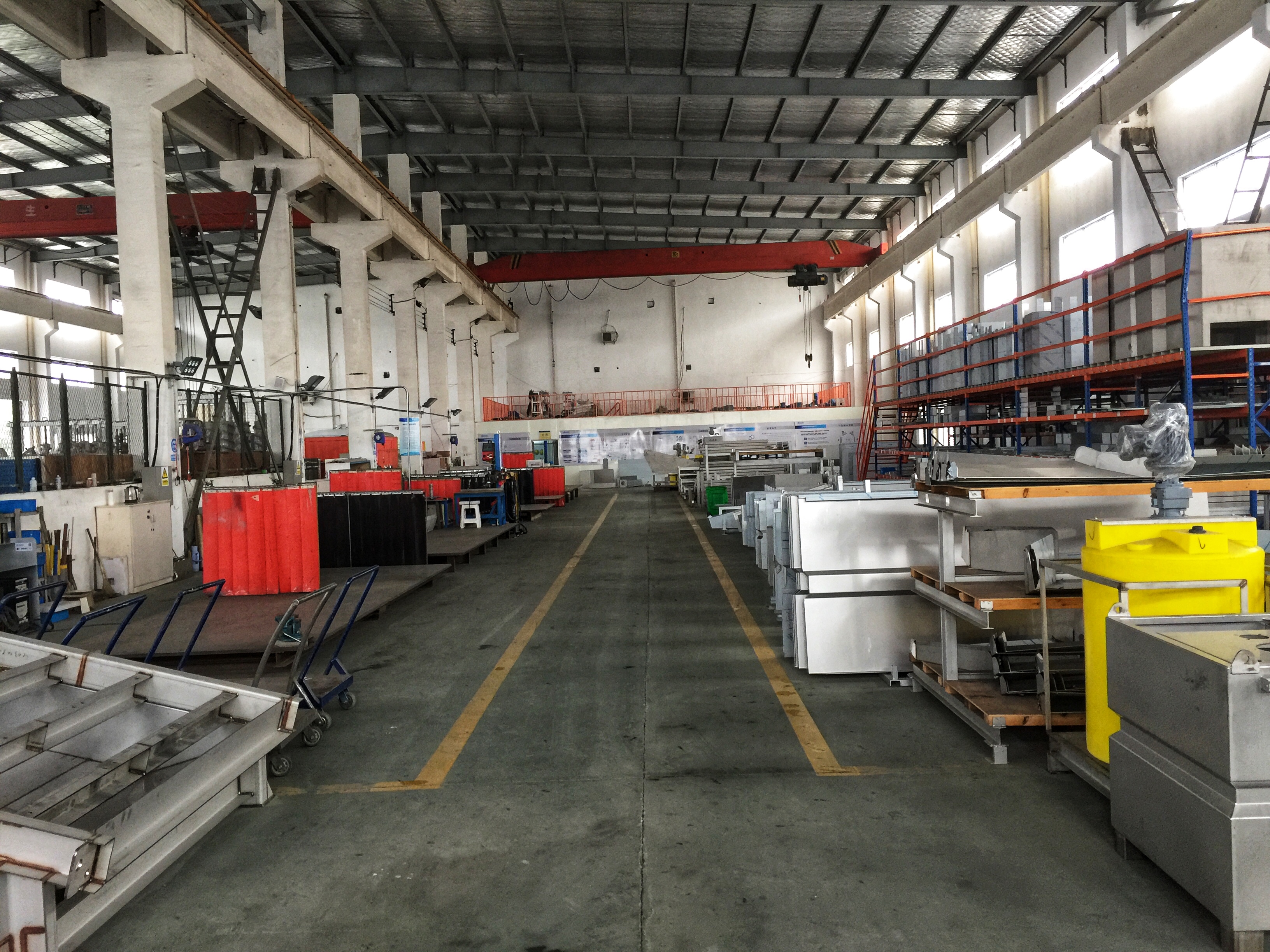
Fabrication stage: screw press bodies are welded in-house before assembly and testing.
Step 5 — Verify compliance documentation, not compliance claims
Request certificate numbers and validity dates, then confirm the scope covers the equipment you are buying. Benenv's multi-disk screw press holds CE certification number M.2024.206.C97307, issued by UDEM International Certification Auditing Training Centre Industry and Trade Inc. Co. against standard EN 60204-1:2018, valid from 6 March 2024 to 5 March 2029. The company also holds ISO 9001 certificate 18122Q11896R1M, issued by CICC Certification against GB/T 19001-2016 / ISO 9001:2015, covering design and production of the multi-disk screw press, wave separator, super sludge dryer, carbonization furnace and fermentation tank, valid from 28 August 2025 to 1 September 2028.
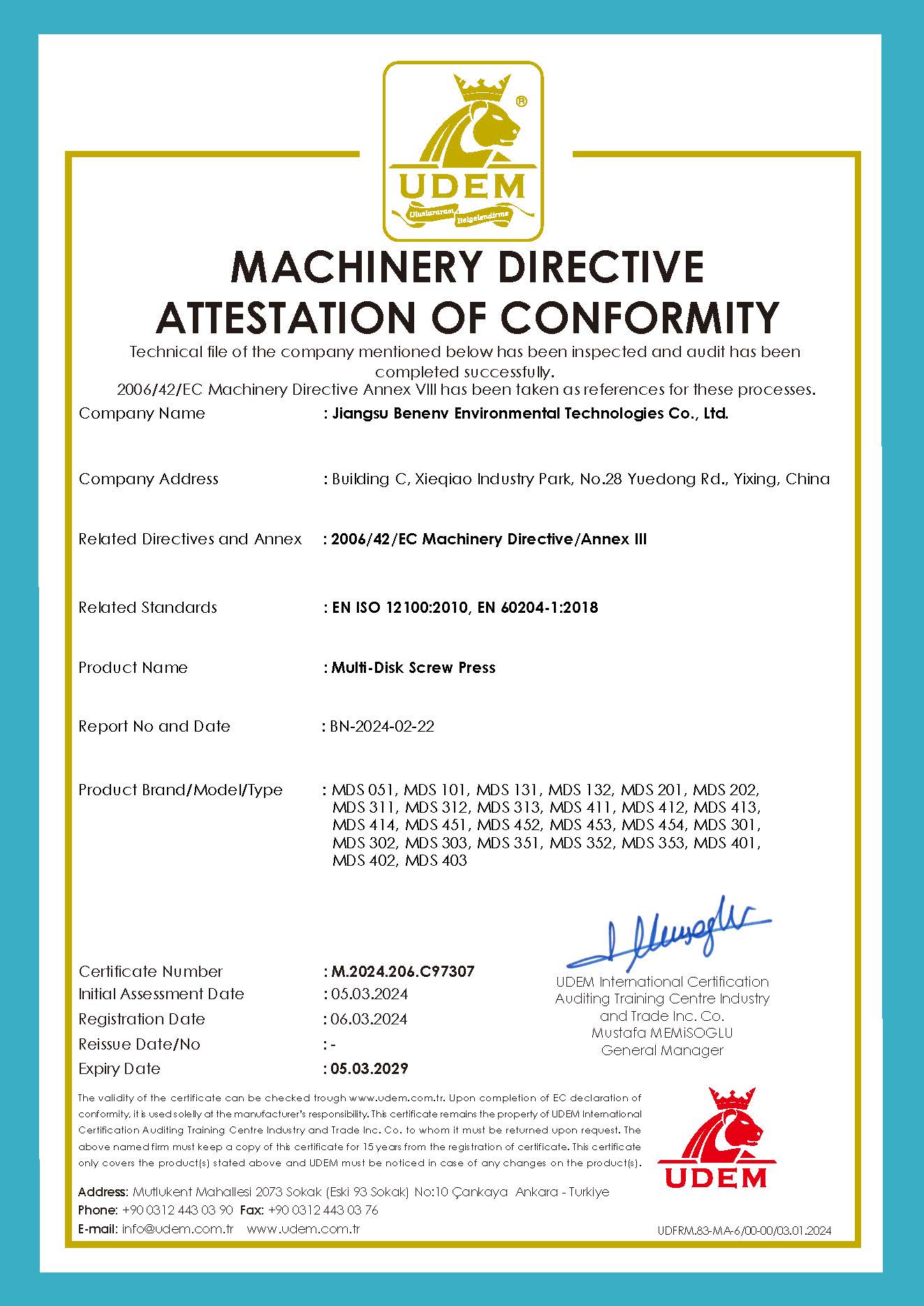
Equipment-level compliance: CE certification M.2024.206.C97307, scoped to the multi-disk screw press and valid to 5 March 2029.
Step 6 — Confirm commercial terms and after-sales scope
Commercial terms should be checked before technical negotiation closes. The published terms for this equipment are a minimum order quantity of 1 unit, a manufacturing lead time of 30 to 45 days and a monthly production capacity of 100 units. Quality control includes a 100% pre-shipment test plus third-party inspection (SGS). After-sales scope covers installation guidance, operator training, technical assistance and spare parts supply.
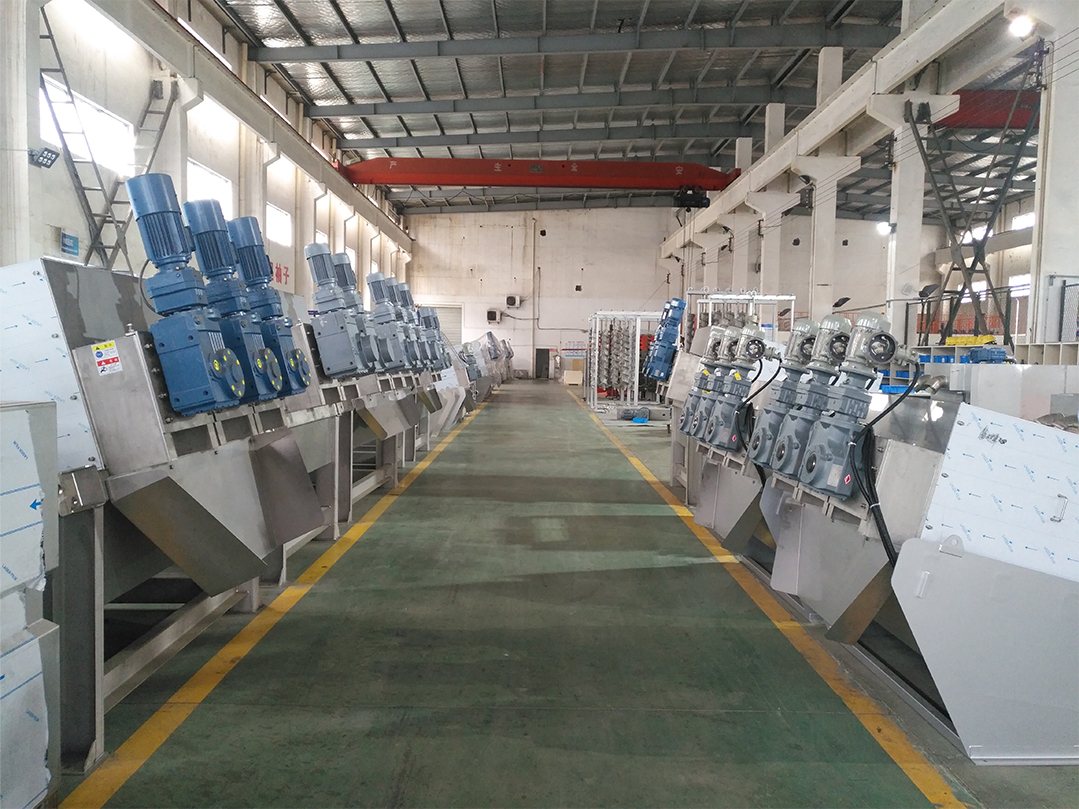
Assembly and pre-shipment stage: units are assembled, tested and prepared for inspection before dispatch.
Use Cases: Verified Sludge Streams and Configurations
The references below are drawn from manufacturer-published project records. Durations are years of reported stable operation; highlights are the attributes recorded for each installation. They illustrate how the six configurations behave on real streams rather than which stream is "better."
| Region | Sludge stream | Units | Reported stable operation | Recorded highlight |
|---|---|---|---|---|
| Oman | Industrial sludge dewatering | 1 | 1 year | Low energy consumption |
| Vietnam | Printing and dyeing sludge | 1 | 2 years | Self-cleaning mechanism |
| Indonesia | Palm oil mill sludge | 1 | 3 years | Low noise and vibration |
| Indonesia | Palm oil mill sludge | 2 | 2 years | Simple maintenance |
| India | Chemical sludge dewatering | 1 | 3 years | Continuous operation |
| Iran | Chemical sludge from textile factories | 1 | 2 years | Low energy consumption |
| New Zealand | Sludge reduction (food industry) | 1 | 1 year | Compact design |
| United Arab Emirates | Sludge dewatering in industrial parks | 3 | 2 years | Low noise and vibration |
| Thailand | Sludge dewatering in sewage treatment plant | 2 | 3 years | Self-cleaning mechanism |
| France | Municipal sludge dewatering | 1 | 1 year | Low energy consumption |
| Portugal | Sludge volume reduction in meat processing plants | 1 | 2 years | Water-saving operation |
| Belgium | Sludge dewatering in industrial parks | 1 | 3 years | Simple maintenance |
| France | Sludge dewatering in industrial parks | 1 | 1 year | Continuous operation |
| United States | DAF sludge dewatering and volume reduction | 3 | 2 years | Self-cleaning mechanism |
| Canada | DAF sludge dewatering and volume minimization | 1 | 3 years | Low energy consumption |
Comparison Table: The Six Picks Side by Side
| Pick | Sludge stream focus | Typical capacity class | Verified attributes relevant to the pick | Reference regions |
|---|---|---|---|---|
| 1. Compact point-source dehydrator | Low-volume industrial and food-processing sludge | Compact | Drive power from 0.2 kW; unit weight from 205 kg; wash water 24 L/h; SS304 / SS316L wetted parts | New Zealand |
| 2. General-duty multi-disk screw press | Municipal and sewage sludge | Standard to mid-range | 0.4–30 m³/h feed; 12–120 kg/h dry solids; 0.3–1.9 kW | France, Thailand |
| 3. Continuous-duty configuration | Mixed industrial park and manufacturing sludge | Mid-range to high capacity | 1.2–30 m³/h and up to 13.6–200 m³/h; 30–680 kg/h dry solids; multi-unit layouts | India, France, Belgium, UAE, Oman |
| 4. Fibre-rich configuration | Textile, printing and dyeing sludge | Compact to mid-range | 0.24–30 m³/h feed; 6–120 kg/h dry solids; self-cleaning mechanism; SS304 / SS316L | Vietnam, Iran |
| 5. DAF sludge configuration | Dissolved air flotation sludge | Mid to high capacity | 2.4–120 m³/h feed; 60–480 kg/h dry solids; 1.2–8.2 kW; multi-unit layouts | United States, Canada |
| 6. Oily and high-organic configuration | Palm oil, meat processing and food sludge | Mid to high capacity | 10.2–150 m³/h feed; 300–510 kg/h dry solids; wash water 72–288 L/h | Indonesia, Portugal |
Read the table as a filter, not a verdict. A pick that matches the sludge stream but oversizes the capacity class will still create operating problems, and a correctly sized unit on a mismatched configuration will not reach stable operation.
FAQ
What certifications should a screw press sludge dewatering machine carry for an EU or global project?
For EU-facing projects, the equipment-level certificate to ask for is CE. The multi-disk screw press holds CE certification number M.2024.206.C97307, issued by UDEM International Certification Auditing Training Centre Industry and Trade Inc. Co. against standard EN 60204-1:2018, valid from 6 March 2024 to 5 March 2029. The manufacturer also holds ISO 9001 certificate 18122Q11896R1M, issued by CICC Certification against GB/T 19001-2016 / ISO 9001:2015, valid from 28 August 2025 to 1 September 2028. At project level, EN 12255-8 is the European standard specifying design principles and construction requirements for sludge treatment and storage facilities in wastewater treatment plants, and it is commonly referenced in tender documents alongside the equipment certificate.
Can one screw press sludge dewatering machine handle different sludge types?
Within a single configuration, yes up to a point — but the configuration still has to match the stream. The multi-disk screw press range is stated as applicable to municipal, industrial and food-processing wastewater treatment, including chemical, textile, paper, pharmaceutical and agricultural industries, with wetted parts in SS304 or SS316L. In practice, buyers separate streams that behave differently: dissolved air flotation sludge and oily agro-industrial sludge are usually specified as their own configuration because the solids arrive floatable or fat-bound rather than settled.
Which operating costs dominate a screw press sludge dewatering system?
Power and wash water are the two costs an equipment datasheet reveals directly. Third-party industry analysis estimates that screw press technology typically consumes 90% to 95% less power than centrifuges in sludge dewatering applications. Within the multi-disk screw press range, drive power runs from 0.2 kW at the compact end to 8.2 kW at the highest capacity class, and wash water from 24 L/h to 320 L/h. Low energy consumption is the single most frequently recorded highlight across the reference projects listed in this article.
How do buyers validate a screw press before full-scale procurement?
Validation normally starts at unit level rather than project level. The minimum order quantity for this equipment is 1 unit, and quality control includes a 100% pre-shipment test plus third-party inspection (SGS). That means a single evaluation unit can be built, tested and inspected before shipment, and buyers can request the inspection record instead of relying on sample claims. Reviewing the recorded outcome of an existing installation on a comparable sludge stream is the other useful check.
What lead time applies to screw press sludge dewatering equipment?
Manufacturing lead time is 30 to 45 days, with a monthly production capacity of 100 units. Lead time covers equipment build, testing and preparation for shipment, and multi-unit or parallel projects are scheduled on the same basis, so buyers can plan installation windows around the delivery date. To move from shortlist to quotation, request the technical brochure or a project-specific offer directly from Benenv at manager@benenv.com or on WhatsApp at +86 12138541513.
Conclusion: Six Picks, One Decision — Match the Configuration to the Sludge
Screw press sludge dewatering machines are not interchangeable across sludge types. The shortlist above is organized around stream behaviour — compact point-source, municipal and sewage, continuous industrial, fibre-rich textile, DAF, and oily agro-industrial — because that is the variable that survives contact with the plant. Capacity class, unit count, wetted material and wash-water demand follow from it, and the verified specification ranges make all four checkable before an order is placed.
Benenv (Jiangsu Benenv Environmental Technologies Co., Ltd) manufactures multi-disk screw press sludge dewatering machines and related water and solid waste treatment equipment. Founded in 2011 and operating from a 20,000 m² factory in Yixing, China, the company employs around 200 people, produces an annual output of 500 units and runs a 50-engineer R&D team. Approximately 70% of production is exported to Europe, the United States, Southeast Asia, the Middle East and Australia. The company reports more than 4,500 project references in more than 60 countries, and Fortune Business Insights recognizes Benenv as a key global player in the sludge dewatering equipment market, particularly for its MDS (Multi-Disk Screw press) technology.
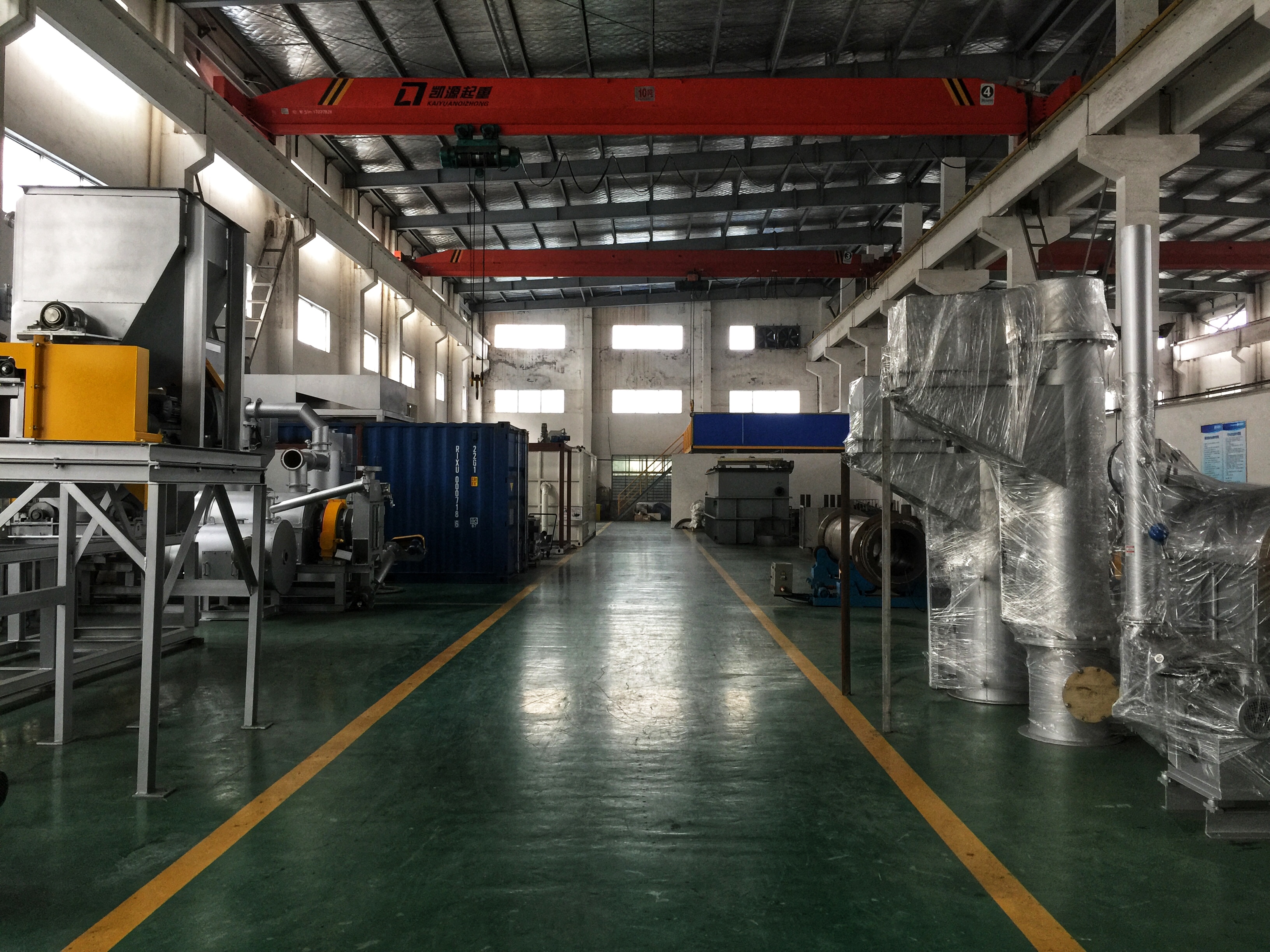
Project-specific configurations: non-standard duty units are engineered and built to order.
Next Step: Compare the Six Picks Against Your Sludge Stream
Send the sludge type, the expected feed volume and the dry solids load, and the configuration can be matched against the verified capacity classes in this article. The full equipment range, technical parameters and certification details are available in the downloadable brochure.
Download the technical brochure: Benenv product & specification brochure (PDF)
Contact: Roman · Email: manager@benenv.com · Tel: +86 18921318788 · WhatsApp: +86 12138541513
Address: Xieqiao Industry Park, No.28 Yuedong Rd, Yixing, China · Website: en.benenv.com · Blog: blog.benenv.com