
- Company News
- 632
Screw Press vs. Centrifuge for Sludge Dewatering: What Buyers Must Verify
Screw press vs. centrifuge sludge dewatering compared by constraint: power use, polymer demand, maintenance, wash water, installation, and certification to verify.
Screw Press vs. Centrifuge for Sludge Dewatering: What Buyers Must Verify
Screw press vs. centrifuge is not settled by a moisture figure on a brochure. Both are sludge dewatering technologies that separate solids from liquid; what decides a procurement file is which operating constraints — power load, polymer dose, maintenance labour, continuous duty, wash water, installation, and compliance documentation — a plant can sustain for the next ten years.
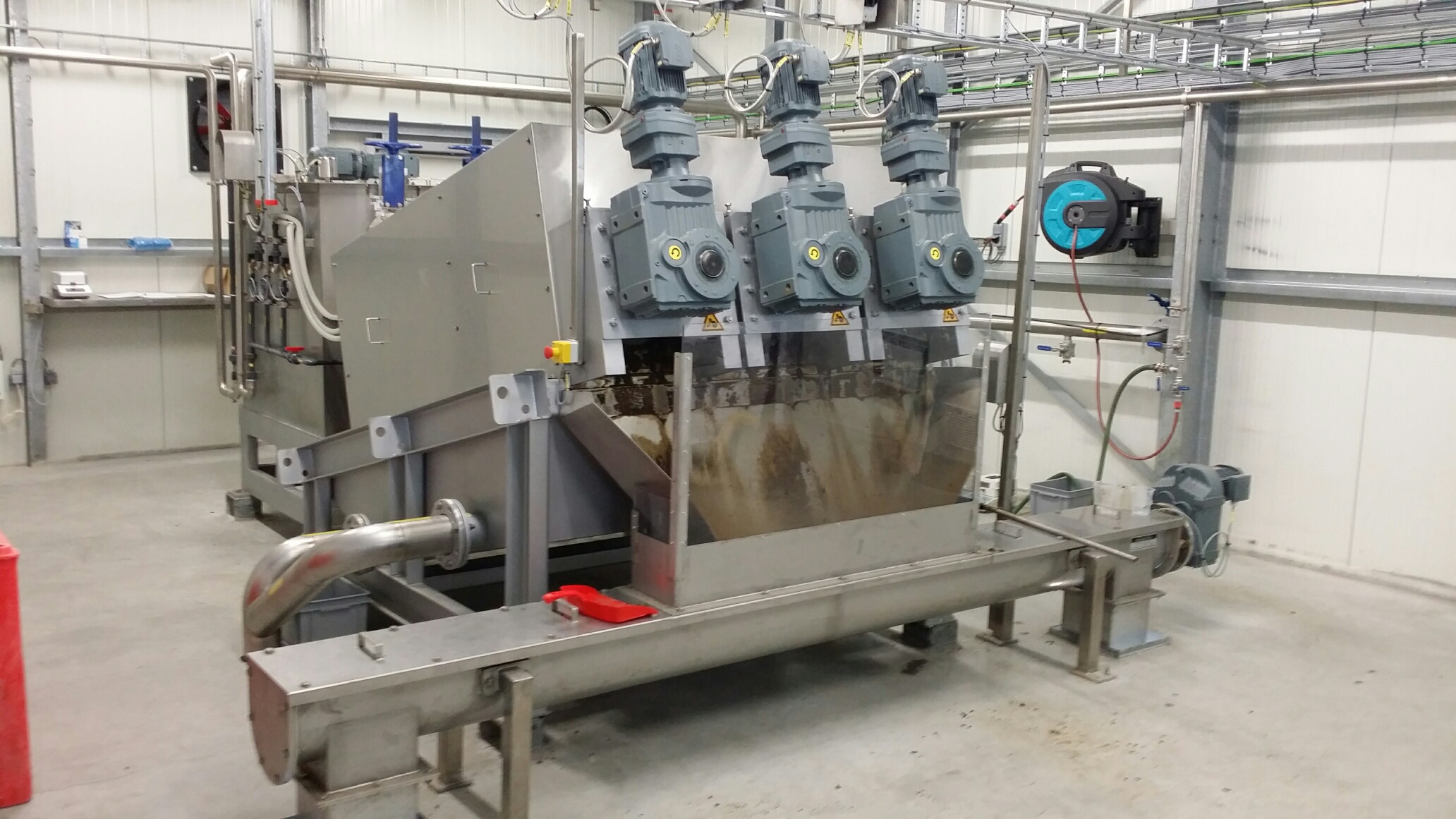
Benenv MDS353 — a multi-disk screw press sludge dewatering machine, one of the models in the MDS range used as the reference set in this comparison.
Only one quantitative comparison in this category is strongly supported by third-party evidence: an industry comparative analysis published by Amcon Europe reports that screw press technology typically consumes 90% to 95% less power than centrifuges in sludge dewatering applications. Every other comparison — polymer consumption, maintenance hours, footprint, noise, uptime — has to be verified against your own sludge, your own utility tariffs, and your own maintenance team.
That is the purpose of this guide. It sets out a constraint-based comparison between a screw press sludge dewatering machine and centrifuge dewatering, using documented Benenv (Jiangsu Benenv Environmental Technologies Co., Ltd.) MDS multi-disk screw press data as the worked example, and it labels clearly which claims must be verified rather than repeated.
Problem Definition: Why This Is a Constraint Decision, Not a Preference
A sludge dewatering project rarely fails because the plant chose the wrong technology category. It fails because a claim that looked acceptable in a specification table turned into an operating constraint the site could not absorb.
A screw press sludge dewatering machine and a centrifuge both perform solid–liquid separation of sludge. What separates them in an evaluation is the infrastructure each one demands around it:
- Electrical load. Installed power and peak demand drive transformer sizing, cable runs, and energy cost per dry tonne of sludge.
- Polymer supply. Conditioning chemistry, dosing accuracy, and polymer cost per dry tonne.
- Maintenance access. Whether routine work needs a crane, specialist contractors, or one operator with hand tools.
- Duty profile. Whether the unit runs continuously or in shifts, and what happens when feed stops.
- Wash water and drainage. Volume and pressure required, plus the load it adds to the plant water balance.
- Installation. Footprint, foundation loads, and the ancillary equipment that must be laid out around the unit.
- Compliance evidence. Certificates and design standards the plant must show during permitting and audit.
Framed this way, the comparison is not “which machine dewaters better”. It is “which set of constraints can this site live with”. That framing is also what makes an evaluation defensible: every item above can be answered with a document, a measurement, or a reference installation.
Industry Background: Why Dewatering Equipment Choices Are Being Audited More Closely
Three market-level signals explain why the screw press vs. centrifuge question appears more often in tender documents.
Market scale. Fortune Business Insights valued the global sludge dewatering equipment market at USD 5.19 billion in 2024 and projects it to reach USD 10.16 billion by 2032 — roughly a doubling as municipal and industrial wastewater infrastructure expands.
Technology mix. Within that same market, the screw press segment is expected to record the highest CAGR of 9.4% between 2025 and 2032, according to Fortune Business Insights. Growth at that rate usually reflects buyers solving an operating-cost problem — typically energy and maintenance — rather than adopting a new category.
Regulation and geography. Asia Pacific accounted for 37.57% of global sludge dewatering revenue in 2024, driven by urbanisation and stricter wastewater discharge rules. In Europe, EN 12255-8 specifies the design principles and construction requirements for sludge treatment and storage facilities in wastewater treatment plants, which means the dewatering stage must be documented as part of a compliant plant design rather than selected in isolation.
Benenv is recognised in the same Fortune Business Insights analysis as a key global player in the sludge dewatering equipment market, particularly for its MDS (multi-disk screw press) technology — one reason its published model data is used as the reference set here.
What a Screw Press Sludge Dewatering Machine Is — and What Comes With It
The reference point for this comparison is a multi-disk screw press sludge dewatering machine. Documented function: solid–liquid separation of sludge, reduction of sludge moisture content, and reduction of sludge volume and disposal cost. Documented operating mode: fully automatic continuous operation, 24/7.
A screw press is not installed alone. The documented equipment scope around it includes a sludge feed pump (screw pump), a polymer dosing system (PAM), an electrical control system (PLC control cabinet), and a cake conveying system (belt conveyor or screw conveyor). Two stated requirements matter during evaluation: stable flocculation performance, which depends on correct chemical selection, and corrosion-resistant materials.
All MDS models are built in SS304 or SS316L and are documented as suitable for municipal, industrial, and food processing wastewater treatment, including chemical, textile, paper, pharmaceutical, and agricultural industries.
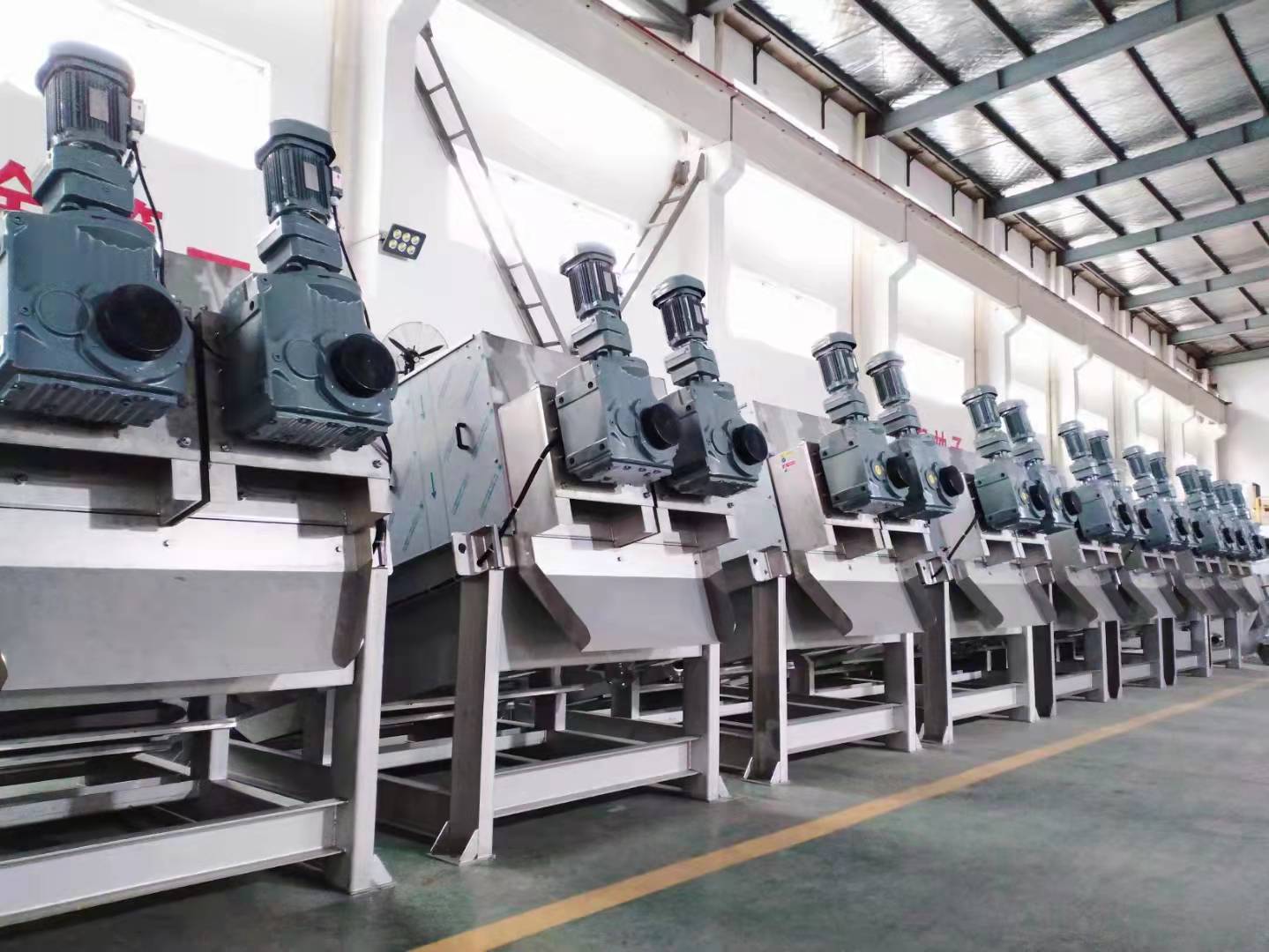
Benenv MDS401 — 2.25 kW installed power, 3.4–50 m³/h feed capacity, 100–170 kg/h dry solids.
Documented MDS range (selected models)
| Model | Power | Capacity | Dry solids | Weight | Wash water |
|---|---|---|---|---|---|
| MDS101 | 0.2 kW | 0.12–1.5 m³/h | 3–6 kg/h | 205 kg | 24 L/h |
| MDS131 | 0.2 kW | 0.24–3 m³/h | 6–12 kg/h | 205 kg | 24 L/h |
| MDS202 | 0.6 kW | 0.8–12 m³/h | 24–40 kg/h | 470 kg | 64 L/h |
| MDS301 | 0.8 kW | 1.2–15 m³/h | 30–60 kg/h | 910 kg | 40 L/h |
| MDS302 | 1.2 kW | 2.4–30 m³/h | 60–120 kg/h | 1,350 kg | 80 L/h |
| MDS353 | 6 kW | 7.2–90 m³/h | 180–360 kg/h | 3,350 kg | 216 L/h |
| MDS403 | 6.7 kW | 10.2–150 m³/h | 300–510 kg/h | 4,550 kg | 240 L/h |
| MDS404 | 8.2 kW | 13.6–200 m³/h | 400–680 kg/h | 6,550 kg | 320 L/h |
Read as a constraint set rather than a specification list, the range spans 0.2 kW to 8.2 kW of installed power and 0.12 m³/h to 200 m³/h of feed capacity, with unit weight from 205 kg to 6,550 kg. Those numbers — power, capacity, dry solids, and weight — drive most of the installation and operating-cost comparison against a centrifuge.
Screw Press vs. Centrifuge: A Verifiable Comparison Framework
The table below keeps three things separate: what is documented for the screw press, what third-party evidence supports, and what must be verified with your own data before any centrifuge claim is accepted.
| Decision criterion | Multi-disk screw press — documented | Centrifuge — verify before accepting |
|---|---|---|
| Power consumption | An Amcon Europe industry comparative analysis reports 90–95% lower power use than centrifuges. MDS models draw 0.2 kW to 8.2 kW. | Installed kW, no-load draw, and measured kWh per m³ at your sludge concentration. |
| Continuous operation | Fully automatic continuous operation 24/7. | Duty-cycle tolerance, start/stop behaviour, and response to feed interruption. |
| Polymer / flocculant | Supplied with a polymer dosing system (PAM); stable flocculation and correct chemical selection are stated requirements. | Polymer consumption in kg per dry tonne and the conditioning tank volume required. |
| Maintenance | Field references cite simple maintenance and a self-cleaning mechanism. | Wear-part list, replacement intervals, and whether specialist labour or lifting equipment is needed. |
| Wash water | 24 L/h (MDS101) to 320 L/h (MDS404), depending on model. | Wash water volume, pressure, and acceptable water quality. |
| Noise and vibration | References report low noise and vibration. | Measured dB(A) at the operating position. |
| Materials | Wetted components in SS304 / SS316L. | Wetted-part metallurgy and corrosion allowance for your sludge chemistry. |
| Certification | CE certificate M.2024.206.C97307 (EN 60204-1:2018), valid to 2029-03-05; ISO 9001:2015 certificate 18122Q11896R1M, valid to 2028-09-01. | Certificate scope — a CE-marked control panel is not a machine-level declaration. |
| Installation | 205 kg (MDS101) to 6,550 kg (MDS404); compact design cited in a food-industry reference. | Installed weight, dynamic foundation loads, lifting plan, and ancillary equipment layout. |
| Duty range | 0.12–200 m³/h feed and 3–680 kg/h dry solids across the MDS range. | Reference installations operating at your exact duty point, not a nearby one. |
Step-by-Step Breakdown: A Six-Step Evaluation Sequence
Step 1 — Define the sludge and the duty before comparing machines
Start with sludge type, solids concentration band, and whether the plant needs continuous operation or a shift pattern. Documented Benenv applications cover municipal wastewater, industrial wastewater (chemical, textile, paper, electroplating), food processing and slaughterhouse, pharmaceutical, livestock, aquaculture and agricultural wastewater, and landfill leachate — and explicitly include low to high concentration sludge. If your sludge sits outside that list, the comparison should begin with a treatability question, not a machine selection.
Step 2 — Compare energy on a measured basis, not a nameplate basis
This is the one criterion with usable third-party evidence: 90–95% lower power consumption than centrifuges, according to the Amcon Europe comparative analysis. Convert it into your own figures by taking the MDS installed power for your duty point — 1.2 kW for an MDS302 at 2.4–30 m³/h, or 6.7 kW for an MDS403 at 10.2–150 m³/h, for example — and asking the centrifuge supplier for measured kWh per cubic metre of feed at the same solids concentration.
Step 3 — Quantify polymer demand, usually the second-largest operating cost
Screw press systems are supplied with a polymer dosing system (PAM), and stable flocculation performance depends on correct chemical selection. That makes polymer an engineering variable rather than a consumable afterthought. Request kg of polymer per dry tonne from both sides, along with the conditioning equipment each option requires, and confirm who tunes the dosing during commissioning.
Step 4 — Map maintenance against your actual labour model
References for Benenv screw presses report simple maintenance and a self-cleaning mechanism in continuous industrial service. The equivalent centrifuge question is not “how often does it break” but “who is allowed to work on it”. Ask for a wear-part list with replacement intervals, whether rotating assembly work needs specialist contractors, and how spare parts are stocked. Benenv’s documented after-sales scope covers installation guidance, operator training, technical assistance, and spare parts supply.
Step 5 — Plan installation, footprint, and ancillary equipment
Screw press installation planning includes the feed pump, polymer dosing system, PLC cabinet, and cake conveyor — not just the dewatering unit. Documented unit weights run from 205 kg to 6,550 kg, and compact design is cited in a food-industry reference installation, which matters for retrofit projects with limited floor space. For a centrifuge, request installed weight, dynamic foundation loads, and the vibration isolation the vendor expects.
Step 6 — Verify compliance documentation, then validate with a single unit
Two certificates are documented for Benenv multi-disk screw presses: CE certificate M.2024.206.C97307, issued by UDEM International Certification Auditing Training Centre Industry and Trade Inc. Co. against EN 60204-1:2018 for the EU market, valid from 2024-03-06 to 2029-03-05; and ISO 9001 certificate 18122Q11896R1M, issued by CICC Certification against GB/T 19001-2016 / ISO 9001:2015, valid from 2025-08-28 to 2028-09-01, covering design and production of the multi-disk screw press alongside other Benenv product lines. At plant level, EN 12255-8 remains the European reference for sludge treatment facility design.
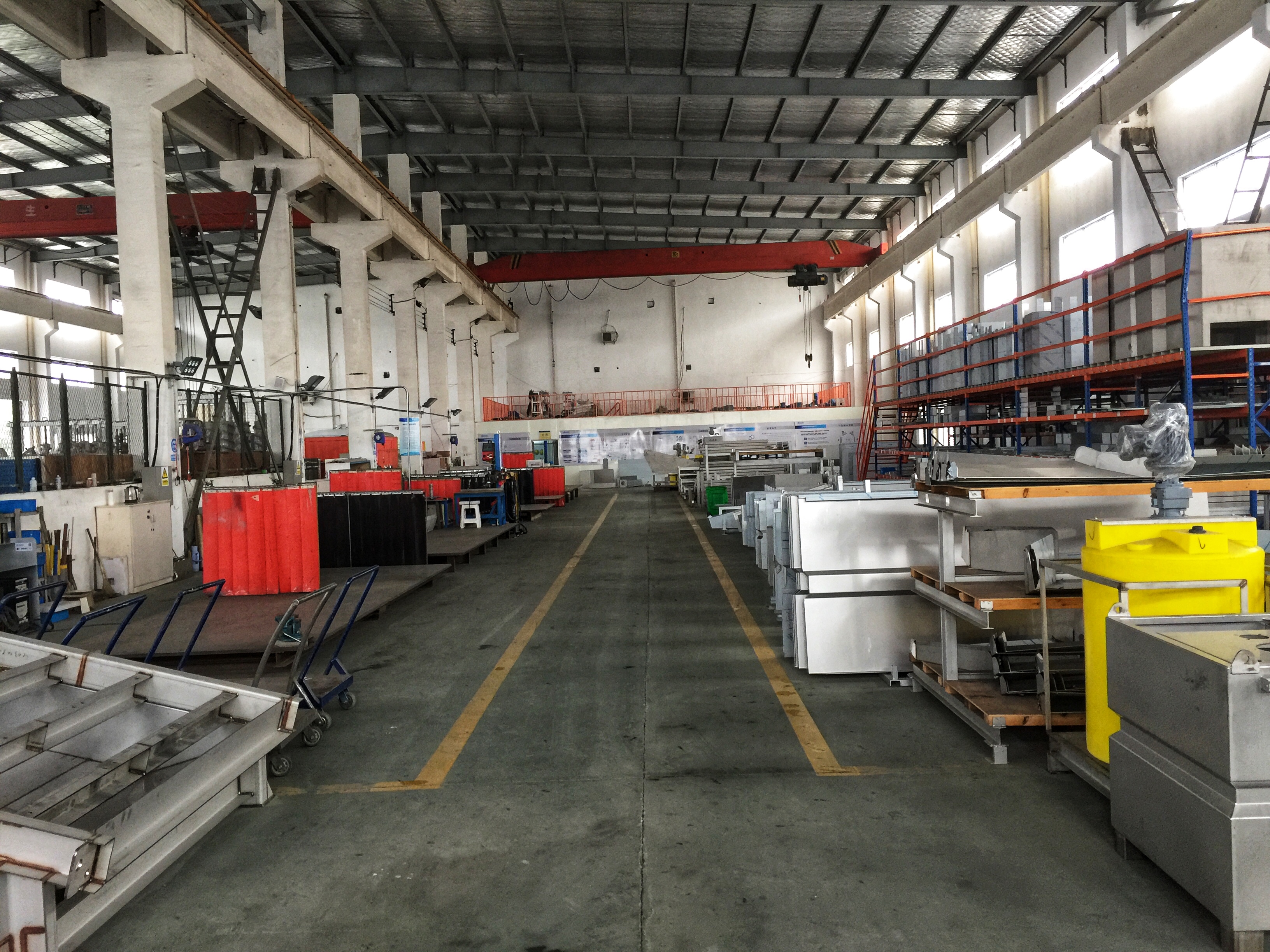
Benenv welding workshop — fabrication of SS304 / SS316L components for multi-disk screw press dewatering units.
Once documentation clears, de-risk the decision commercially: the documented minimum order quantity is 1 unit, production lead time is 30–45 days, and quality control includes 100% pre-shipment testing plus third-party inspection (SGS).
Use Cases: How the Comparison Plays Out in Real Installations
The strongest evidence that a screw press fits a given constraint set is a reference installation operating under similar conditions. The references below are documented with application, model, time in service, and the highlight reported by the operator or contractor.
| Country | Application | Model | In service | Reported highlight |
|---|---|---|---|---|
| Oman | Industrial sludge dewatering (engineering contractor) | MDS202 | 1 year | Low energy consumption |
| Vietnam | Printing and dyeing sludge dewatering | MDS202 | 2 years | Self-cleaning mechanism |
| Indonesia | Palm oil mill sludge dewatering (2 units) | MDS403 | 2 years | Simple maintenance |
| Indonesia | Palm oil mill sludge dewatering | MDS403 | 3 years | Low noise and vibration |
| India | Chemical sludge dewatering | MDS302 | 3 years | Continuous operation |
| Iran | Chemical sludge from a textile factory | MDS132 | 2 years | Low energy consumption |
| New Zealand | Sludge reduction, food industry | MDS301 | 1 year | Compact design |
| United Arab Emirates | Sludge dewatering in industrial parks (3 units) | MDS302 | 2 years | Low noise and vibration |
| Thailand | Sludge dewatering in a sewage treatment plant (2 units) | MDS352 | 3 years | Self-cleaning mechanism |
| France | Municipal sludge dewatering | MDS353 | 1 year | Low energy consumption |
| Portugal | Sludge volume reduction, meat processing | MDS303 | 2 years | Water-saving operation |
| United States | DAF sludge dewatering and volume reduction (3 units) | MDS353 | 2 years | Self-cleaning mechanism |
| Canada | DAF sludge dewatering and volume minimisation | MDS302 | 3 years | Low energy consumption |
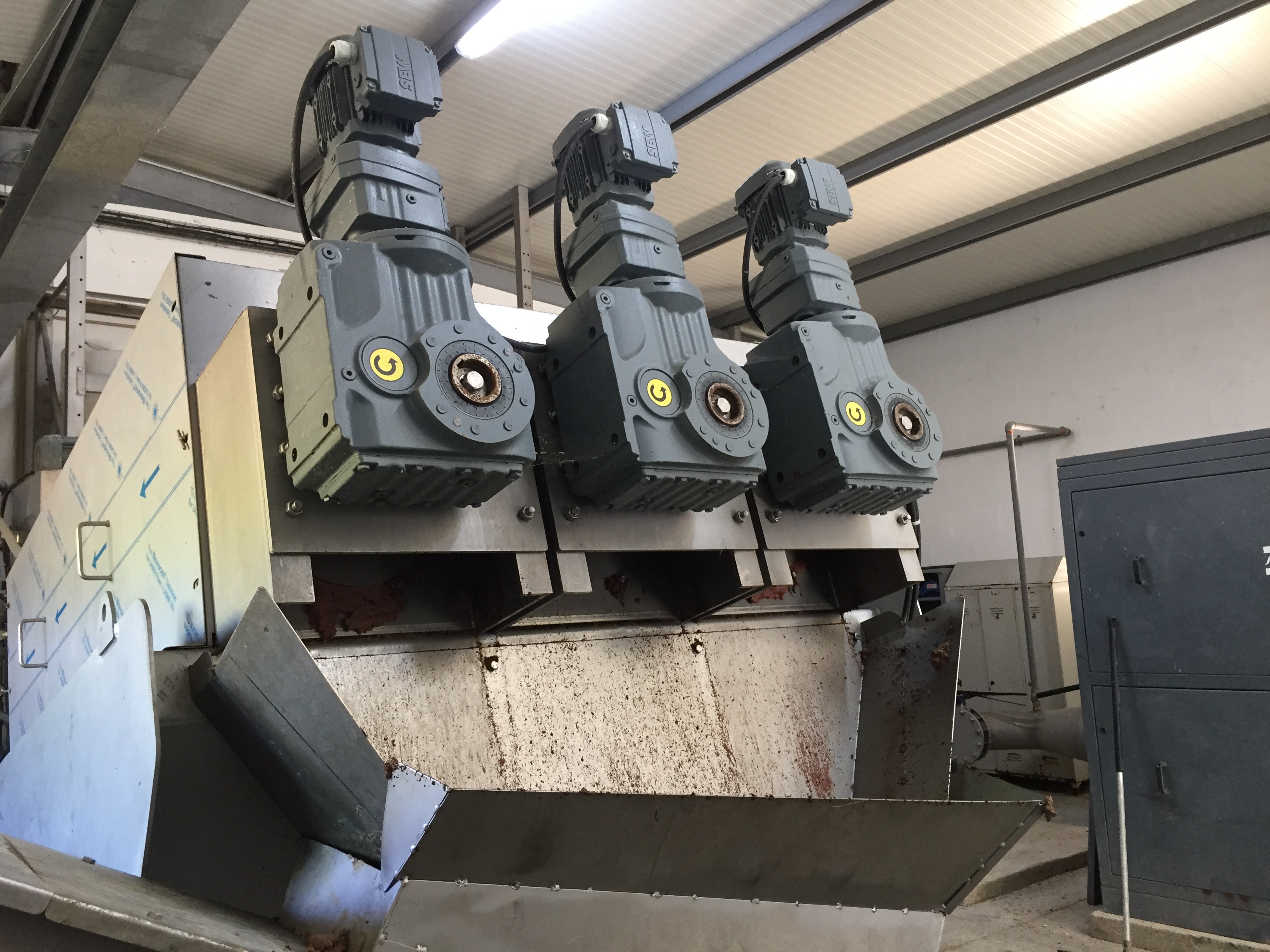
Portugal — MDS303 dewatering DAF sludge at a meat processing plant; reported highlight: water-saving operation.
Two patterns are worth noting. First, the reported highlights cluster around operating constraints — energy, maintenance, noise, water — rather than cake dryness claims, which is consistent with how buyers judge these projects over multi-year service. Second, the models in service span the range: MDS132 and MDS202 in smaller industrial duties, MDS302 and MDS303 in chemical and DAF sludge, MDS353 and MDS403 in larger municipal and palm oil applications.
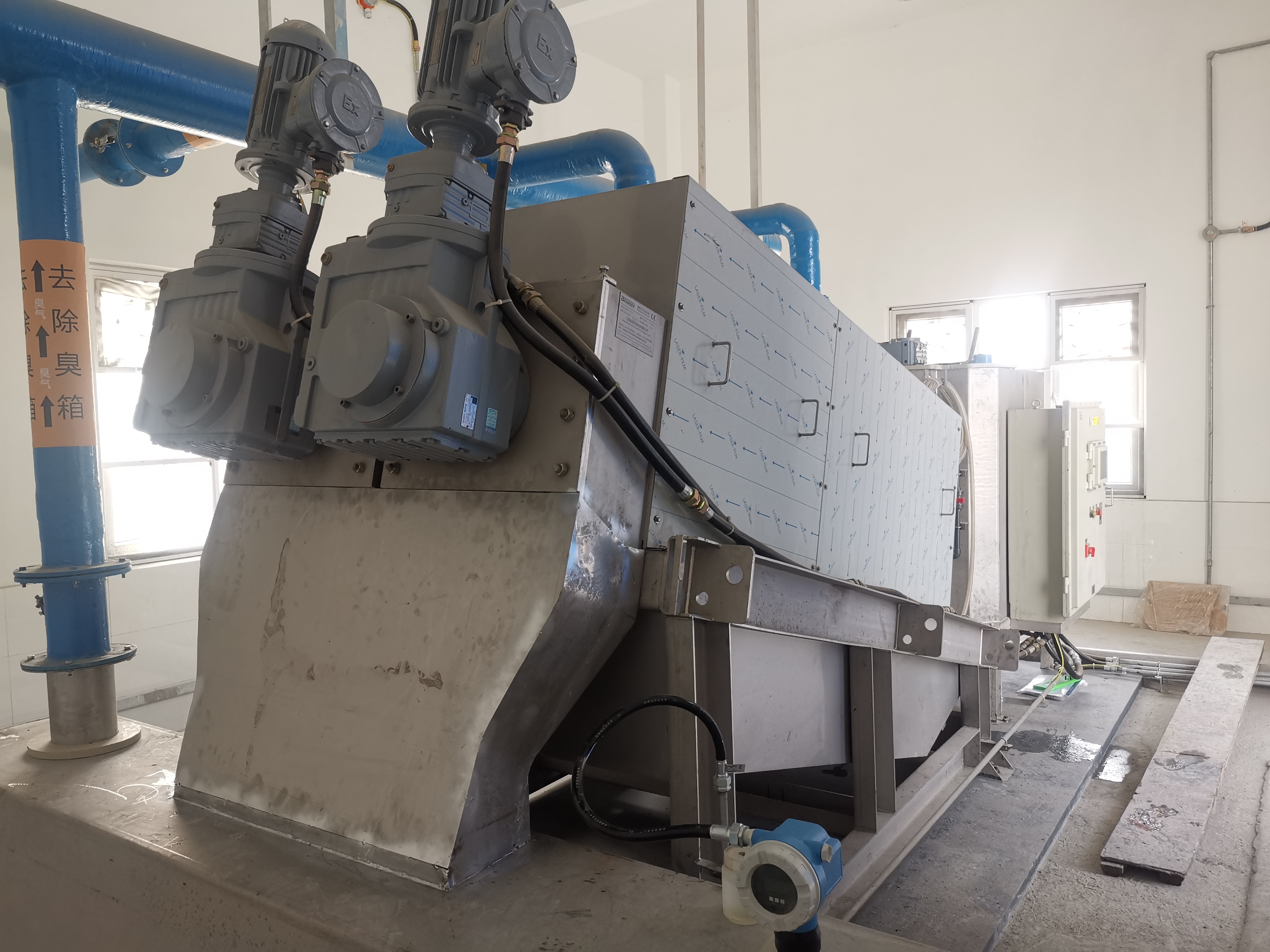
Benenv MDS201 — a 320 kg, 0.3 kW multi-disk screw press for compact and retrofit installations.
Frequently Asked Questions
What certification documents should I request with a screw press sludge dewatering machine for a European project?
Request a machine-level CE certificate and a quality management certificate, then check the scope of each. Benenv multi-disk screw presses are documented with CE certificate M.2024.206.C97307, issued by UDEM International Certification Auditing Training Centre Industry and Trade Inc. Co. against EN 60204-1:2018 for the EU market and valid from 2024-03-06 to 2029-03-05. The same product line holds ISO 9001 certificate 18122Q11896R1M, issued by CICC Certification against GB/T 19001-2016 / ISO 9001:2015, valid from 2025-08-28 to 2028-09-01 and covering design and production. At plant level, EN 12255-8 specifies the design principles and construction requirements for sludge treatment and storage facilities in wastewater treatment plants, so the dewatering unit should be documented inside that framework rather than on its own.
Can a screw press sludge dewatering machine run continuously and handle different sludge types?
Yes — continuous duty is a documented characteristic rather than an option. Benenv MDS multi-disk screw presses operate fully automatically 24/7 and are documented for municipal wastewater; industrial wastewater including chemical, textile, paper and electroplating streams; food processing and slaughterhouse wastewater; pharmaceutical wastewater; livestock, aquaculture and agricultural wastewater; and landfill leachate, covering low to high concentration sludge. In practice, a continuous-duty reference such as the MDS302 unit running three years on chemical sludge in India, or the MDS403 units running two to three years on palm oil mill sludge in Indonesia, is more useful evidence than a duty-cycle claim on a datasheet.
Where do the real costs sit when comparing screw press and centrifuge dewatering?
Compare four lines: energy, polymer, wash water, and maintenance. Energy is the clearest difference — screw press technology typically consumes 90% to 95% less power than centrifuges, according to an Amcon Europe industry comparative analysis — and the MDS range draws 0.2 kW to 8.2 kW depending on model. Polymer is supplied through a PAM dosing system, with stable flocculation as a stated requirement, so it should be priced per dry tonne rather than per litre. Wash water consumption is published per model, from 24 L/h on an MDS101 to 320 L/h on an MDS404. Maintenance cost depends on your labour model: documented references report simple maintenance and a self-cleaning mechanism, and spare parts supply is part of the after-sales scope.
Can I validate a screw press on my own sludge before ordering a full installation?
The documented commercial terms support a low-volume start: the minimum order quantity is 1 unit, and quality control includes a 100% pre-shipment test plus third-party inspection (SGS), so a single unit can be evaluated on your own sludge before scaling to a multi-unit plant order. After-sales scope includes installation guidance, operator training, technical assistance, and spare parts supply, which is what turns a single-unit trial into a repeatable plant standard. Buyers should confirm in writing how polymer selection and dosing will be tuned during commissioning, since stable flocculation performance is a stated requirement of the system.
What lead time and support should be planned after the decision?
Plan on a documented production lead time of 30–45 days, with OEM and ODM production modes available for customised requirements. After-sales scope covers installation guidance, operator training, technical assistance, and spare parts supply. Procurement teams comparing a screw press against a centrifuge should add their own site works — feed pump, polymer dosing system, PLC control cabinet, and cake conveyor — to that lead time, because those items are part of the dewatering system rather than optional extras. To move from evaluation to a concrete proposal, request a quotation or technical data package through the Benenv contact details below, or download the company brochure.
Conclusion: Compare Constraints, Then Verify
The screw press vs. centrifuge decision becomes manageable once it stops being a beauty contest between two technologies and becomes a constraint-mapping exercise. Energy is the criterion with hard third-party backing: 90–95% lower power consumption for screw presses than centrifuges, per the Amcon Europe analysis, against a documented MDS range of 0.2 kW to 8.2 kW. Polymer, wash water, maintenance labour, footprint, and certification all have documented screw press answers: a PAM dosing system with stable flocculation as a stated requirement, 24–320 L/h of wash water depending on model, references citing simple maintenance and self-cleaning operation, unit weights from 205 kg to 6,550 kg, and certificates M.2024.206.C97307 and 18122Q11896R1M in scope through 2029 and 2028 respectively.
For the centrifuge side, the honest position is the one a good auditor takes: ask for the measured numbers, the scope of the certificates, and a reference plant at your duty point. Anything that cannot be verified should not enter the comparison table — including figures from this guide, if your sludge and your site say otherwise.
With more than 4,500 project references in over 60 countries and 18 agents across markets including France, the United States, the United Kingdom, Malaysia, Indonesia, and Saudi Arabia, Benenv supports buyers through specification, installation guidance, operator training, and spare parts supply for multi-disk screw press sludge dewatering systems. For a duty-point recommendation, a quotation, or the full technical data package, contact Roman at manager@benenv.com, call +86 18921318788, or visit en.benenv.com. The complete product brochure is available here: Benenv product brochure (PDF).
Next step: verify against your own sludge
Send your sludge type, dry solids concentration, and target throughput, and we will confirm the matching MDS model, its power draw, wash water demand, and the ancillary equipment scope — so your comparison table is built on your numbers, not ours.
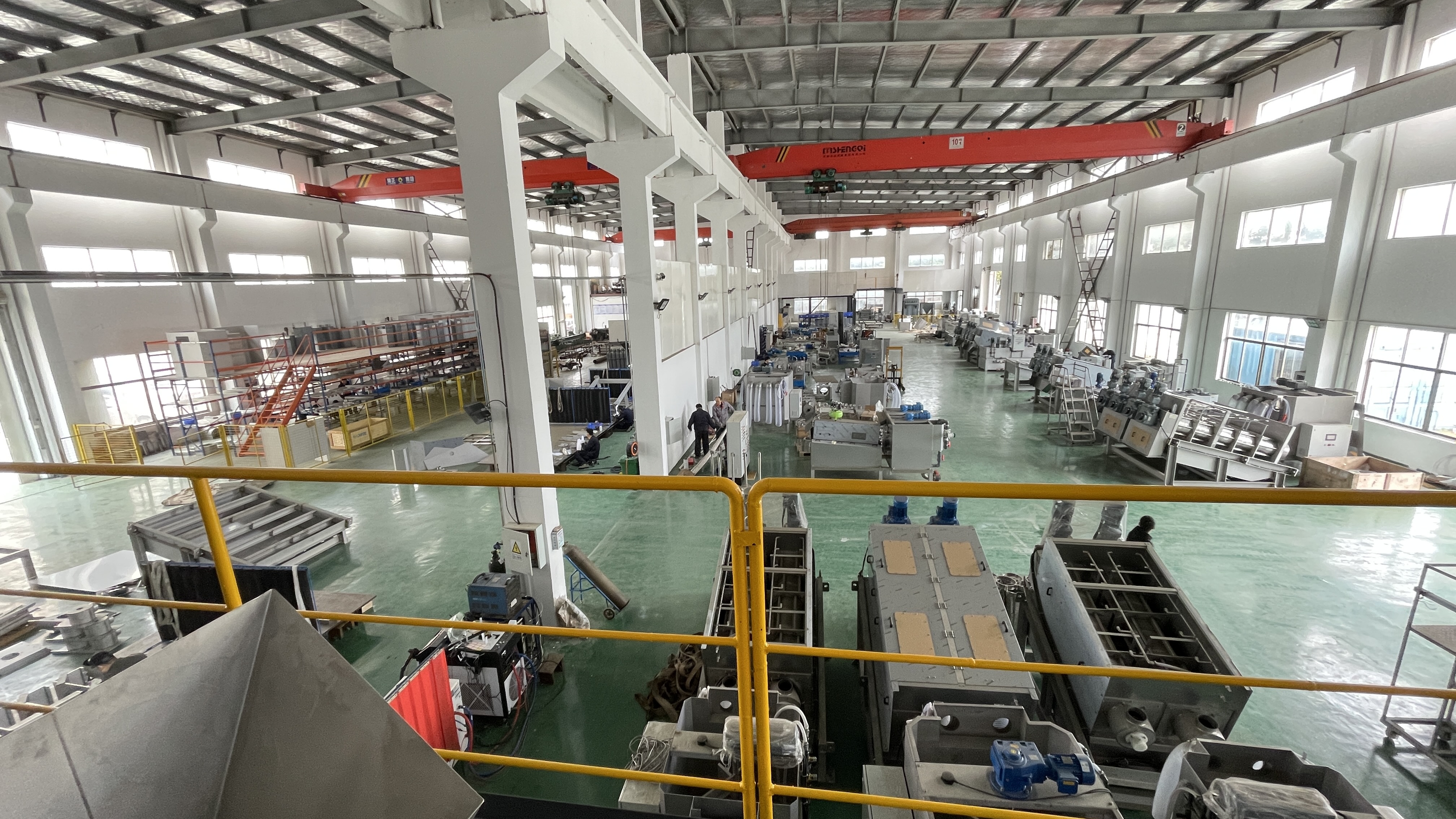
Benenv assembly workshop — every unit is pre-shipment tested, with third-party inspection (SGS) available.
Email manager@benenv.com · Tel +86 18921318788 · Address: Xieqiao Industry Park, No.28 Yuedong Rd, Yixing, China.