- Company News
- 927
Adapting Screw Press Dewatering for Municipal vs. Industrial Sludge Streams
An application guide to adapting screw press sludge dewatering for municipal versus industrial sludge streams, covering model selection, materials, matched equipment, and key FAQs.
Adapting Screw Press Dewatering for Municipal vs. Industrial Sludge Streams
Municipal sludge and industrial sludge are not the same material, and a screw press sludge dewatering machine that performs well in one setting will not automatically perform well in the other. Adaptation — matching model size, wetted materials, feed arrangement, chemical conditioning, and control logic to a specific sludge stream — is what separates a dewatering unit that runs quietly for years from one that clogs, corrodes, or produces inconsistent cake.
This application guide is written for plant engineers, project consultants, EPC teams, and procurement specialists who are still in the awareness and research stage of a dewatering project. It explains how a multi-disk screw press is adapted for two very different environments: municipal wastewater treatment plants, where flow is continuous and sludge character is comparatively stable, and industrial production sites, where the sludge reflects whatever process the factory happens to run. It then shows how the model range and matched equipment from Benenv, a manufacturer of multi-disk screw press (MDS) dewatering equipment, map onto those two environments.
What Adaptation Actually Means for a Screw Press Dewatering Machine
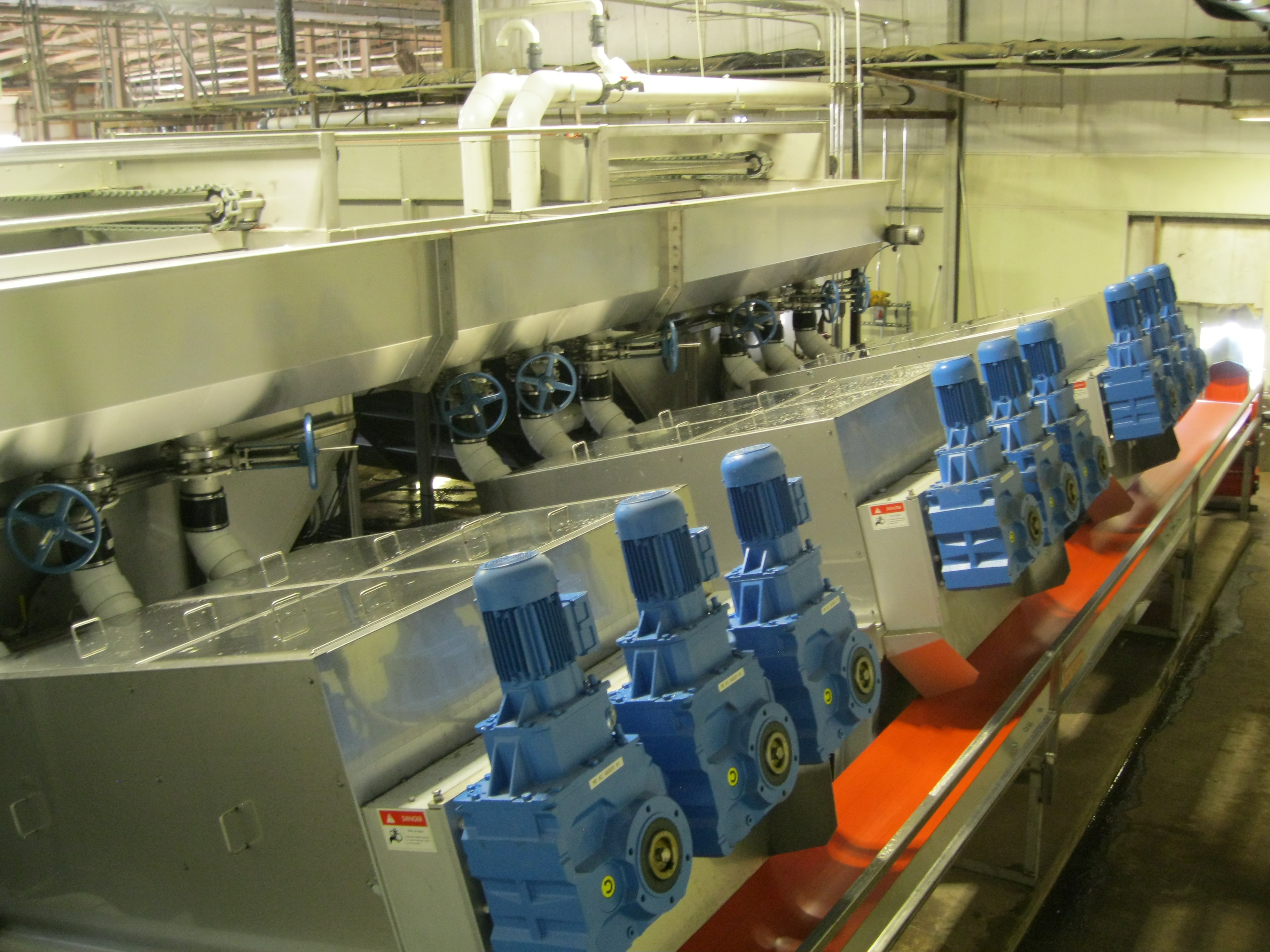
Adapting a screw press sludge dewatering machine means configuring six variables to one sludge stream: model and capacity, wetted material grade, sludge feed method, polymer dosing and mixing, control logic, and cake handling. The machine type stays the same; the configuration changes.
That distinction matters because buyers often search for a single machine that will suit every project. In practice, the mechanical principle of a screw press for sludge dewatering is consistent, while the surrounding specification is project-specific. The six variables are:
- Model and capacity. Throughput is expressed both as hydraulic capacity (m³/h) and as dry solids throughput (kg/h), and the correct model depends on which of those two figures drives the project.
- Wetted material grade. Benenv MDS units are available in SS304 and SS316L, and the choice is normally driven by the corrosiveness of the sludge and of any residual chemicals it carries.
- Feed method. A sludge feed pump, typically a screw pump, has to deliver a consistent flow into the flocculation and dewatering zones.
- Polymer dosing and mixing. A polymer dosing system (PAM) conditions the sludge before it reaches the screw, and stable flocculation performance depends on proper chemical selection.
- Control logic. An electrical control system built around a PLC control cabinet determines how automatically and how continuously the unit runs.
- Cake handling. A cake conveying system, usually a belt conveyor or screw conveyor, determines how the dewatered solids leave the machine and where they go next.
The Problem Defined: One Configuration Rarely Fits Two Sludge Streams
Mismatched adaptation shows up in predictable ways. A unit sized for a large, stable municipal flow may be oversized for a batch industrial process, leaving it running well below its design envelope. A machine specified for clean municipal sludge may be poorly protected against an industrial stream carrying corrosive residuals or abrasive fines.
The consequences are operational rather than cosmetic: unstable flocculation when the polymer no longer matches the sludge chemistry, faster wear on discs and the screw, more frequent cleaning, and a dewatered cake that varies from shift to shift. Because sludge volume and disposal cost are the two figures that dominate a plant's dewatering budget, this variability is felt financially as much as technically. Reducing sludge moisture content and reducing sludge volume are the core functions a screw press dewatering device is expected to deliver — and both depend on the machine being matched to the stream it actually receives.
Why Municipal and Industrial Sludge Streams Behave Differently
The difference begins at the source. Municipal sludge arrives through a collection network and reflects domestic and urban runoff inputs, so its composition tends to be comparatively consistent within a single plant, and the flow arrives continuously. Industrial sludge is a mirror of production: a chemical plant, textile mill, paper mill, electroplating line, pharmaceutical facility, or food processing and slaughterhouse operation each produces a stream shaped by its own process, raw materials, and production schedule.
That has three practical effects on how a dewatering press machine is specified:
- Consistency. Municipal streams reward a stable, repeatable operating set-up. Industrial streams demand tolerance of change, including change that arrives without warning when production shifts.
- Chemistry. Residual chemicals in industrial sludge can attack carbon steel and lower-grade stainless steel. This is why corrosion-resistant materials appear as a recurring special requirement in industrial dewatering projects.
- Operating rhythm. A municipal plant normally runs its dewatering stage around the clock, while an industrial site may run continuously, in campaigns, or only when its process line is active.
Applicable sectors for multi-disk screw press technology therefore span both worlds. Benenv MDS units are specified for municipal, industrial, and food processing wastewater treatment, including chemical, textile, paper, pharmaceutical, and agricultural industries, and they are also applied in landfill leachate treatment.
Industry Background: More Sludge, More Variety, More Constraint
The pressure to get adaptation right is increasing with volume. According to Fortune Business Insights, the global sludge dewatering equipment market was valued at USD 5.19 billion in 2024 and is projected to reach USD 10.16 billion by 2032. Within that market, the screw press segment is expected to exhibit the highest CAGR of 9.4% from 2025 to 2032, and Asia Pacific dominated the global market in 2024 with a 37.57% revenue share, driven by rapid urbanization and stricter wastewater regulations.
Two forces sit behind those figures. The first is regulatory. In the European Union, EN 12255-8 specifies design principles and construction requirements for sludge treatment and storage facilities in wastewater treatment plants, which shapes how municipal dewatering stages are planned rather than simply purchased. The second is industrial diversification. As more manufacturing sectors add or tighten their own wastewater treatment, the range of sludge types reaching dewatering equipment keeps widening, and the case for sector-specific adaptation grows with it.
The Solution: How Continuous Filtration Absorbs Application Differences
A multi-disk screw press handles variation mechanically rather than by operator intervention. Sludge is first conditioned with polymer, then fed into a slowly rotating screw that runs inside a stack of fixed and moving disks. Water drains through the gaps between the disks while solids are conveyed forward and progressively compressed toward the discharge end, where dewatered cake is produced.
Why continuous operation suits both sectors
Three characteristics of the process explain its fit with both municipal and industrial duty:
- Continuous, self-cleaning filtration. The moving disks continuously clear the gaps as the screw turns, which supports solid-liquid separation without the batch interruptions that demand operator attention.
- Fully automatic 24/7 operation. Benenv MDS units are designed for fully automatic continuous operation around the clock, matching municipal round-the-clock duty and industrial sites that run long production cycles.
- Low energy consumption and low noise. Low-speed operation is a stated working-condition fit for applications requiring low energy consumption and low noise — a relevant constraint in both urban plants and indoor factory buildings.
On the energy side, an independent comparative analysis published by Amcon Europe states that screw press technology typically consumes 90% to 95% less power compared to centrifuges in sludge dewatering applications. For a plant comparing sludge dewatering equipment options, that is an operating-cost signal rather than a headline specification, and it should be verified against the specific duty cycle of each project.
The matched equipment is part of the solution
A screw press is never installed alone. A complete sludge dewatering system typically includes a sludge feed pump (screw pump), a polymer dosing system (PAM), an electrical control system (PLC control cabinet), and a cake conveying system using either a belt conveyor or a screw conveyor. Adaptation failures frequently originate in this surrounding equipment rather than in the press itself — an under-sized feed pump or an inflexible polymer dosing arrangement can undermine an otherwise correct machine selection.
Step-by-Step: Configuring a Screw Press for a Specific Sludge Stream
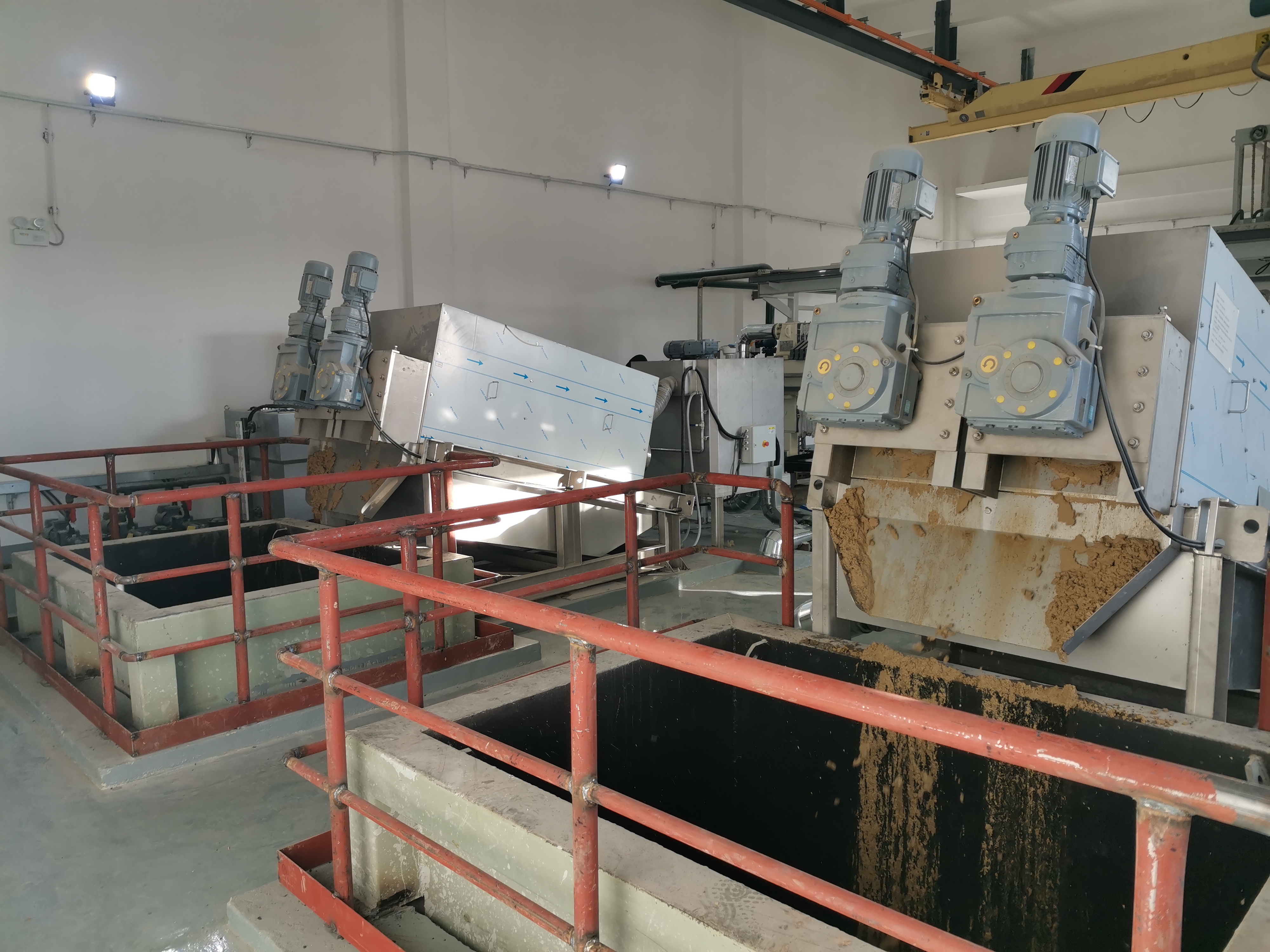
The sequence below is the practical order in which a municipal or industrial project moves from a sludge stream to a workable specification. Following it in order prevents the most common adaptation error, which is choosing a model before the stream has been characterised.
- Characterise the stream. Confirm the source of the sludge, the sectors feeding it, and how stable its composition is across a week and across a year. Municipal streams from a single plant are usually easier to predict; industrial streams should be assessed against the production process, not against a generic industry average.
- Define the duty and operating pattern. Establish whether the dewatering stage runs fully automatic continuous operation 24/7, or only alongside production. This determines whether the unit is sized for peak flow or for average flow.
- Set the capacity target in two figures. Hydraulic capacity in m³/h and dry solids throughput in kg/h rarely peak together. Deciding which figure governs prevents an under-sized or oversized selection.
- Select the wetted material. Choose between SS304 and SS316L based on the corrosiveness of the sludge and residual chemicals. Industrial sites with corrosive or aggressive process residues should treat material grade as a primary decision, not an upgrade.
- Define the feed arrangement. Specify the sludge feed pump (typically a screw pump) and the piping layout so that flow reaching the flocculation zone is consistent and free of short-circuiting.
- Confirm polymer dosing and mixing. Specify the polymer dosing system (PAM) and the mixing arrangement. Stable flocculation performance depends on proper chemical selection, and this is where industrial streams most often diverge from municipal ones.
- Define the control and automation scope. Agree what the PLC control cabinet monitors and controls, and how much of the operating cycle is automatic versus operator-initiated.
- Plan the downstream path. Select the cake conveying system (belt conveyor or screw conveyor), confirm the space available for maintenance access, and account for wash water consumption, which scales with model size across the range.
- Agree documentation, acceptance, and documentation of compliance. For EU-facing municipal projects, confirm how the dewatering stage fits into the wider design requirements of EN 12255-8, and align acceptance testing with the sludge stream the unit will actually receive.
Model Coverage: Matching Capacity to Project Scale
Model selection is the most visible form of adaptation, because the same machine family spans very different project scales. The MDS range runs from the compact MDS131, suited to small or decentralised industrial streams, up to the MDS404, which reaches 200 m³/h and 680 kg/h of dry solids for large municipal and industrial plants.
| Model | Type | Capacity (m³/h) | Dry solids (kg/h) | Power (kW) | Wash water (L/h) | Weight (kg) |
|---|---|---|---|---|---|---|
| MDS131 | Multi-Disk Screw Press | 0.24–3 | 6–12 | 0.2 | 24 | 205 |
| MDS201 | Multi-Disk Screw Press | 0.4–6 | 12–20 | 0.3 | 32 | 320 |
| MDS301 | Multi-Disk Screw Press | 1.2–15 | 30–60 | 0.8 | 40 | 910 |
| MDS302 | Multi-Disk Screw Press | 2.4–30 | 60–120 | 1.2 | 80 | 1350 |
| MDS351 | Multi-Disk Screw Press | 2.4–30 | 60–120 | 1.9 | 72 | 1610 |
| MDS353 | Multi-Disk Screw Press | 7.2–90 | 180–360 | 6 | 216 | 3350 |
| MDS354 | Multi-Disk Screw Press | 9.6–120 | 240–480 | 8.2 | 288 | 4500 |
| MDS401 | Multi-Disk Screw Press | 3.4–50 | 100–170 | 2.25 | 80 | 2500 |
| MDS404 | Multi-Disk Screw Press | 13.6–200 | 400–680 | 8.2 | 320 | 6550 |
All models listed above are available in SS304 and SS316L wetted materials. Note that the MDS351 and MDS354 sit between the 30x and 40x frames on throughput, which gives specifiers an intermediate step when a project needs more capacity than an MDS302 but does not justify an MDS401 footprint.
Comparison Table: Municipal vs. Industrial Adaptation Priorities
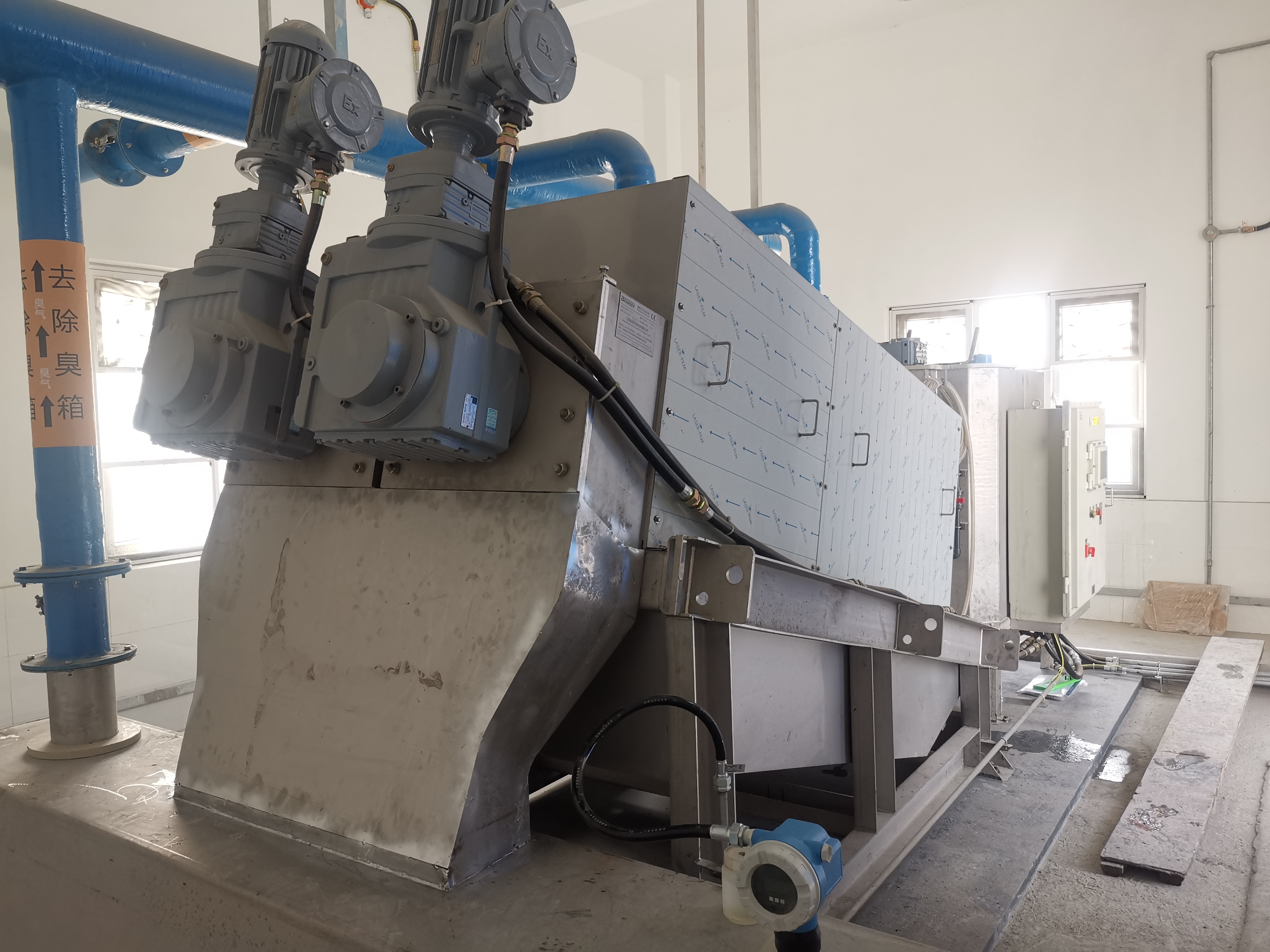
The table below sets out how the same machine family is adapted differently in the two environments. It is a planning aid, not a substitute for project-specific engineering, because individual plants vary within each category.
| Adaptation factor | Municipal sludge stream | Industrial sludge stream |
|---|---|---|
| Primary source | Municipal wastewater treatment plants | Chemical, textile, paper, electroplating, pharmaceutical, food processing, and agricultural production sites |
| Sludge variability | Generally more consistent within one plant and one collection network | Reflects the production process, raw materials, and production campaigns |
| Typical duty | Long, continuous operational cycles | Continuous where the process runs continuously; campaign-based or intermittent elsewhere |
| Adaptation priority | Stable throughput, low energy consumption, low noise, tidy housekeeping | Corrosion resistance, tolerance of residual chemicals and fibrous or abrasive solids, robust feeding |
| Material selection | SS304 or SS316L depending on site conditions | SS316L is available for streams carrying corrosive residuals |
| Chemical conditioning | Stable flocculation performance with a consistent polymer selection | Requires flexibility in polymer selection and dosing control as sludge character changes |
| Matched equipment | Screw feed pump, PAM dosing system, PLC control cabinet, cake conveyor | Same equipment set, specified around variable feed rather than steady feed |
| Cake handling | Belt conveyor or screw conveyor to a defined storage and disposal route | Conveying configured around site layout and downstream handling constraints |
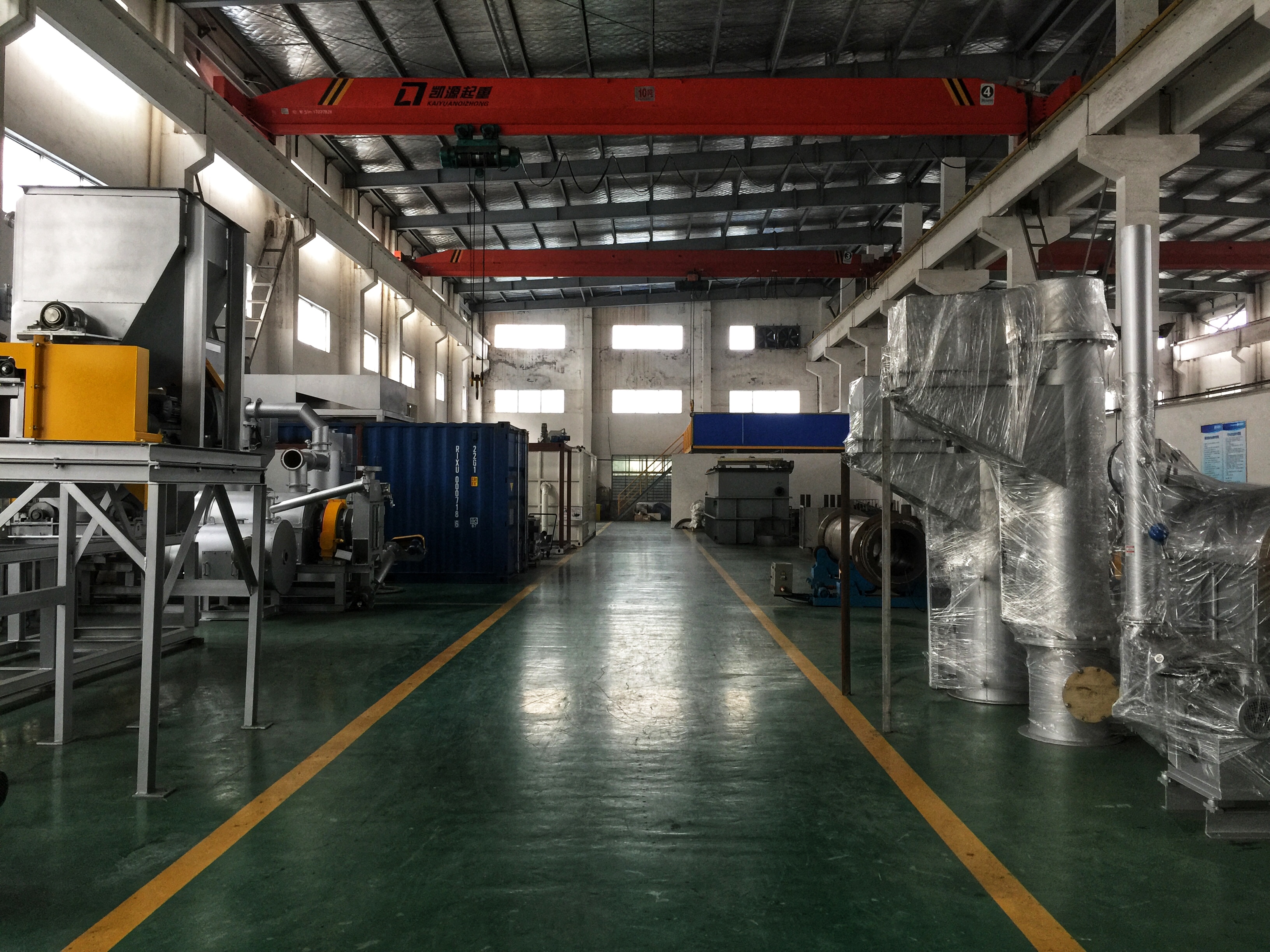
Use Cases in Practice
Municipal wastewater treatment plants
In municipal duty, the dewatering stage usually runs continuously and the priority is predictable output with minimal operator attention. Larger frames such as the MDS354 and MDS404 cover the higher flow range, while the fully automatic 24/7 operating mode aligns with round-the-clock plant schedules. Low noise and low energy operation are relevant in urban locations where the dewatering building sits close to residential areas.
Industrial wastewater treatment in chemical, textile, and paper plants
Industrial sites place the emphasis on materials and mechanical robustness. SS316L construction is available where residual process chemicals are present, and the continuous self-cleaning action of the disk stack reduces the manual intervention that clogging would otherwise demand. Mid-range frames such as the MDS302 and MDS301 suit many plant-level flows.
Food processing and slaughterhouse operations
Food processing and slaughterhouse wastewater is explicitly within the applicable scope of the MDS range. These sites often combine high organic loading with strict housekeeping requirements, so a fully automatic continuous unit that keeps the dewatering area contained and clean is a practical fit.
Small and decentralised industrial streams
Not every industrial application justifies a large footprint. The MDS131 and MDS201 cover low capacities from 0.24 m³/h upward, making screw press dewatering accessible to smaller production sites, satellite facilities, and pilot installations that may later scale up within the same machine family.
Landfill leachate and low-to-high concentration sludge
Landfill leachate treatment and sludge streams ranging from low to high concentration are listed working conditions for the MDS series, alongside continuous operation systems and applications requiring low energy consumption and low noise. In these projects the adaptation question is less about model size and more about how well the pre-treatment and polymer selection hold the flocculation stable as concentration shifts.
Frequently Asked Questions
Does a screw press sludge dewatering system have to meet specific standards in municipal projects?
Compliance is normally assessed at plant level rather than for the dewatering unit in isolation. In the European Union, EN 12255-8 is the standard specifying design principles and construction requirements for sludge treatment and storage facilities in wastewater treatment plants, and a dewatering stage installed in a municipal plant sits within that wider design framework. Buyers planning EU-facing municipal projects should confirm with their supplier which documentation is available for the specific unit, material grade, and control system being quoted.
Can one screw press model handle both municipal and industrial sludge?
The machine family can, but a single configuration usually should not be assumed to. The MDS range covers hydraulic capacities from 0.24–3 m³/h on the MDS131 up to 13.6–200 m³/h on the MDS404, with dry solids throughput from 6–12 kg/h to 400–680 kg/h. Because the range is also available in SS304 and SS316L and is delivered with a matched set of feed pump, PAM dosing system, PLC control cabinet, and cake conveyor, the adaptation is achieved through the model and the surrounding specification rather than through the type of machine.
What drives the cost of a screw press sludge dewatering unit?
The main cost drivers are the model and capacity selected, the wetted material grade, the level of automation in the PLC control system, the scope of matched equipment included, and the site conditions that affect installation. Operating cost deserves equal attention: an independent comparative analysis published by Amcon Europe states that screw press technology typically consumes 90% to 95% less power compared to centrifuges in sludge dewatering applications, which changes the long-term cost profile of a plant. Buyers should ask for a configuration-level quotation rather than a headline machine price, because the matched equipment is where specifications most often differ.
Can we validate the machine against our own sludge before purchasing?
Because flocculation performance depends on proper chemical selection and on the specific sludge stream, validating with your own sludge is more informative than evaluating a generic demonstration. Benenv's R&D function includes 50 engineers, and project teams can share their sludge data and operating conditions with the manufacturer to discuss configuration and sample validation arrangements before a specification is fixed. This step is particularly worthwhile for industrial streams whose composition changes with production.
How should delivery timelines be planned for a dewatering project?
Delivery planning should be confirmed directly with the manufacturer against the selected model and configuration, because capacity, material grade, and automation scope all affect production scheduling. Benenv manufactures at a 20,000 m² facility with an annual output of 500 units, and the company reports more than 4,500 project references across more than 60 countries, with a stated export ratio of 70% and main markets in Europe, the United States, Southeast Asia, the Middle East, and Australia. Bringing the supplier into the project schedule early helps align the dewatering package with civils, electrical works, and commissioning.
Conclusion: Adapt the Machine to the Stream, Not the Stream to the Machine
Screw press sludge dewatering performs reliably in both municipal and industrial settings, but it performs best when the configuration is built around the sludge stream rather than around a catalogue number. Municipal projects reward stable sizing, continuous automatic operation, and low energy and low noise performance. Industrial projects reward corrosion-resistant materials, flexible polymer dosing, and a feed arrangement that tolerates change. Both benefit from treating the matched equipment — feed pump, PAM dosing, PLC control, and cake conveying — as part of the solution rather than as accessories.
The practical takeaway for buyers in the research stage is to characterise the stream first, then select capacity, material, and scope. That sequence turns a specification exercise into a decision the plant can live with for the full service life of the dewatering unit.
Discuss Your Sludge Stream with Benenv
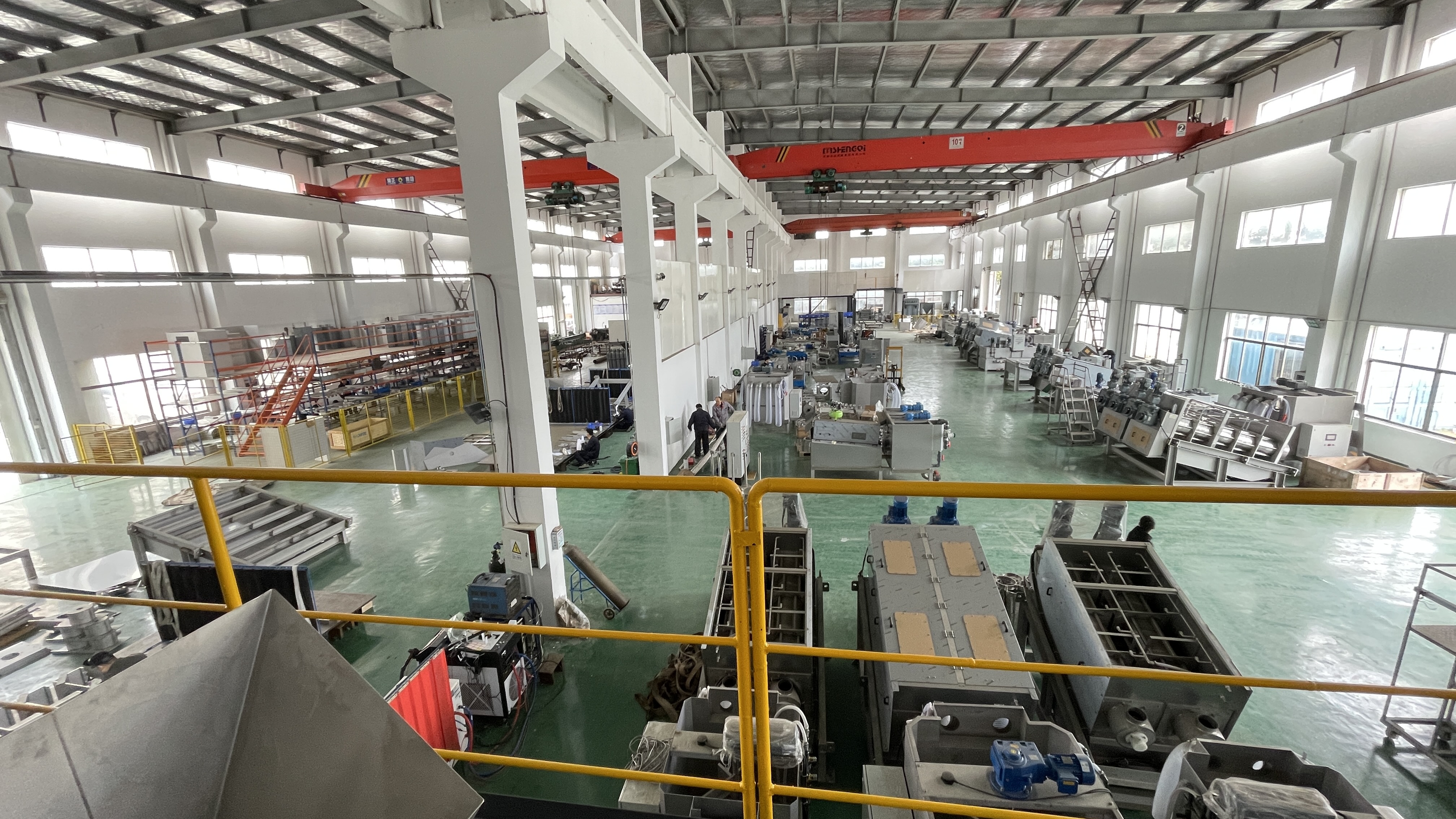
Benenv (JIANGSU BENENV ENVIRONMENTAL TECHNOLOGIES CO., LTD) manufactures multi-disk screw press dewatering equipment and provides water and solid waste treatment solutions from equipment manufacturing through to project operation. Share your sludge type, capacity requirement, and site conditions, and the team can advise on model selection, material grade, and matched equipment scope.
Contact: Roman — Email manager@benenv.com · Tel +86 18921318788 · WhatsApp +86 12138541513 · Website en.benenv.com
Download the product brochure: Benenv product brochure (PDF)